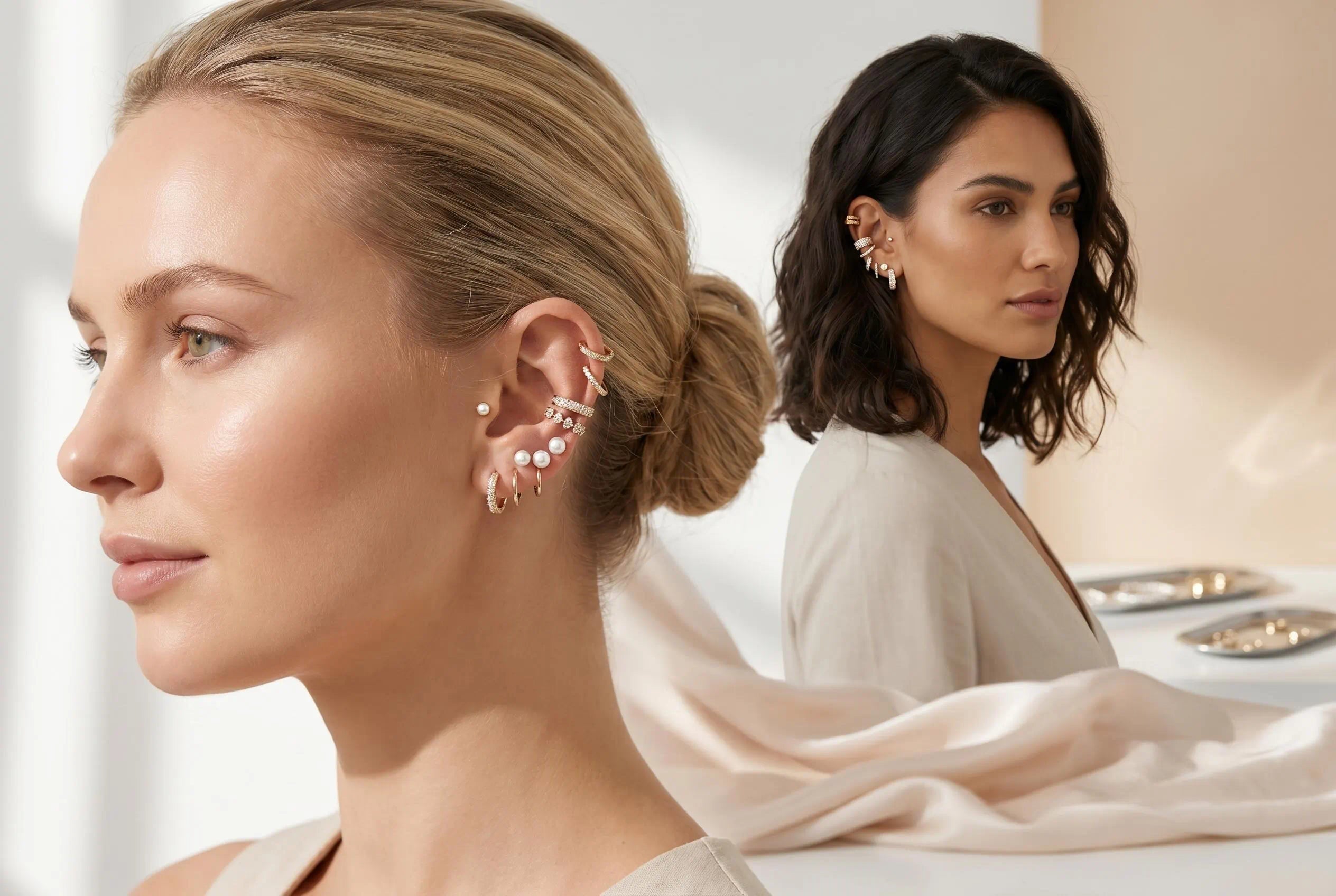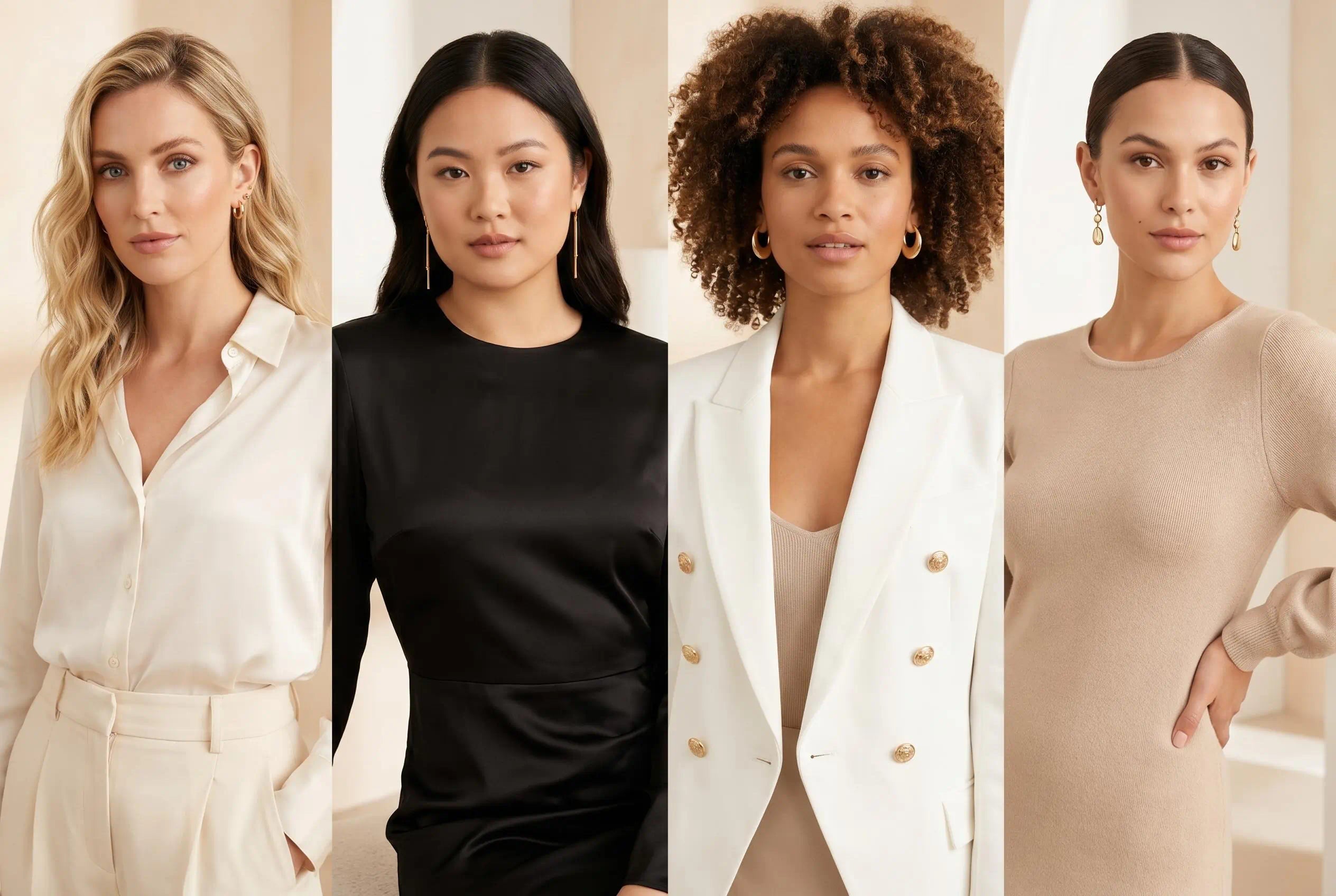
A complete Australian guide to choosing earrings that flatter your face shape, covering oval, round, square, heart, oblong and diamond shapes.
Face shape is one of the simpler factors that influences how an earring style reads on you. The relationship between the shape of an earring and the shape of the face it sits next to is older than fashion itself, but the principles behind it are easy to understand once you see them laid out. This guide walks through the six common face shapes, how to identify yours, and which earring styles tend to flatter each.
Before going further, a small caveat. Face shape is one factor among many. Hair, glasses, neckline, occasion and personal aesthetic all matter too. The recommendations below are starting points rather than rigid rules, and exceptions are welcome. The goal is a framework you can use, not a script you have to follow.
How Face Shape Affects Earring Choice
The basic principle behind face shape earring styling is balance. Earrings sit close to the face and the brain naturally reads their shape in relation to the face shape next to them. When the earring shape complements the face, the overall look feels harmonised. When it echoes the face too closely or contrasts too sharply, the styling can feel slightly off without it being obvious why.
The two main techniques are balancing and softening. Balancing uses earring shapes that contrast the dominant lines of the face, like adding curves to an angular face. Softening uses earrings to take visual emphasis away from features the wearer wants to play down, like long drops on a round face to add length.
The right earring does not change your face. It simply lets the face be seen on its own terms.
How to Identify Your Face Shape
Identifying your face shape takes about a minute and a mirror. The key reference points are forehead width, cheekbone width, jaw width, and overall face length.
Most people fall somewhere between two shapes rather than fitting a single category cleanly. If you are between two, the recommendations below for both shapes will give you a wider range of safe styling choices.
Earrings for Each Face Shape
Forehead slightly wider than the jaw, gentle curves, length greater than width. Considered a balanced shape that pairs with most earring styles.
Almost everything. Studs, hoops of any size, drops, dangles, statement pieces. The oval face is the canvas the rest of the framework is built around. If you have an oval face, treat earring choice as a personal aesthetic decision rather than a face shape decision.
Even though most styles work, very long dangles can elongate an already long face further. If you prefer to keep the proportions balanced, classic drops and medium hoops are reliable choices.
Width and length roughly equal, soft jaw, full cheeks. The aim is usually to add length and create vertical lines.
Long drops, linear dangles, teardrops, and angular geometric earrings. The vertical line of a long drop visually elongates the face and slims the overall shape. Square, rectangular, and triangular drop earrings add the angular contrast that softens the roundness.
Avoid round studs that echo the face roundness, and avoid wide circular hoops that emphasise width over length. If you do wear hoops, slim oval shapes are kinder to round faces. Perfectly round hoops echo the face shape and add to the impression of width.
Strong angular jaw, forehead and jaw similar in width, length similar to width. The aim is usually to soften the jaw with curves.
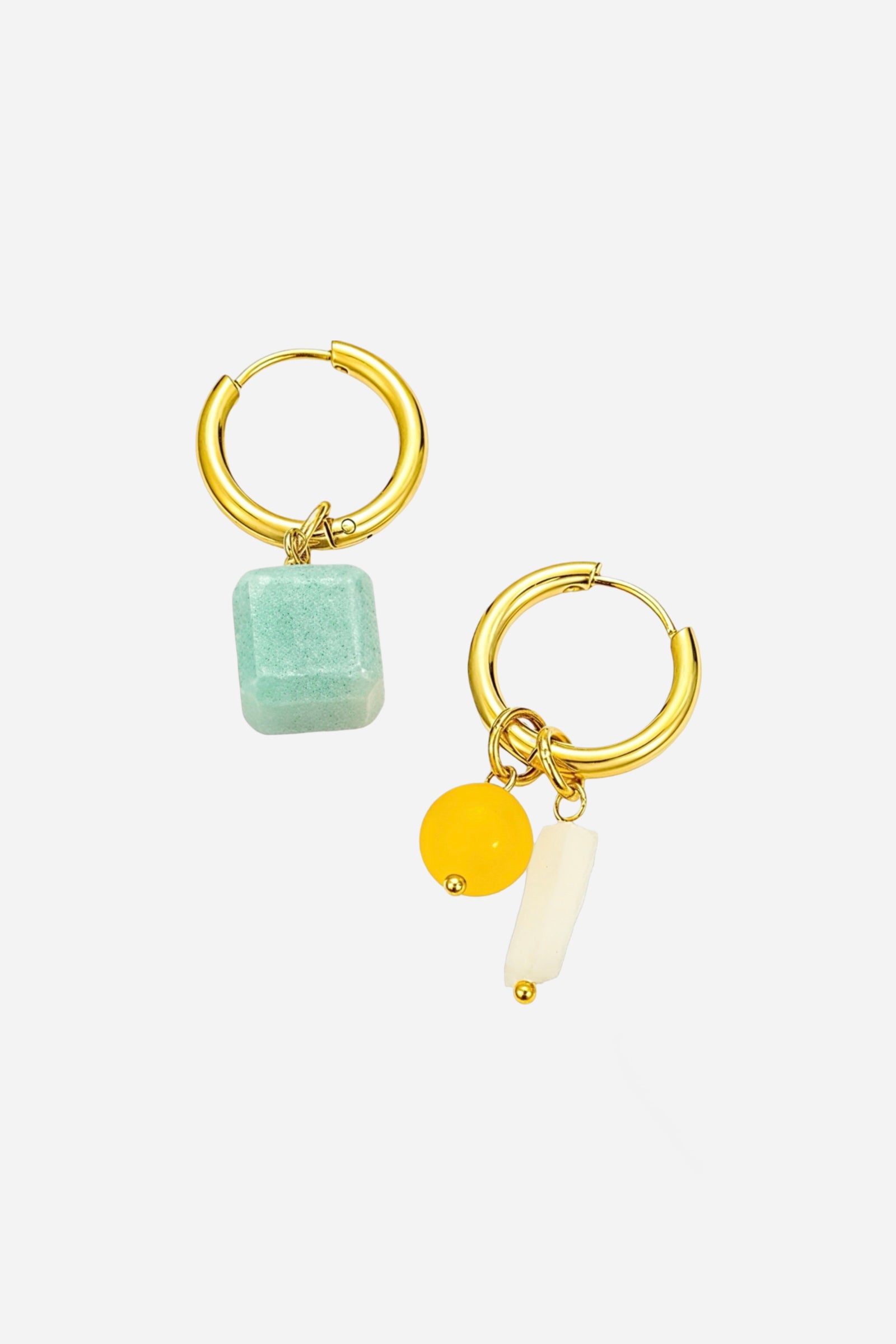
Curved hoops, oval drops, sculptural pieces with rounded edges, and pearl drops. Hoops in particular contrast the square jaw line beautifully. Soft drop shapes draw the eye toward the centre of the face rather than the corners. Charm hoops with rounded charms add gentle movement and curve.
Strict geometric shapes (squares, rectangles, sharp triangles) tend to echo the angular jaw and amplify it. Soft sculptural pieces work in their place.
Wider forehead, narrower chin, often with a defined point at the chin. The aim is usually to add visual width to the lower face.
Teardrops, chandelier styles, and earrings that are wider at the bottom than the top. Pear shaped drops and triangle drops with the wide end down both balance the narrower chin. Pearl drops and crystal drops in this silhouette are particularly graceful.
Heavy stud earrings or earrings wider at the top draw additional attention to the already wider forehead. Inverted triangle shapes (pointed end down) tend to amplify the chin point rather than balance it.
Length noticeably greater than width, similar widths at forehead, cheeks and jaw. Often described as a longer rectangular shape. The aim is usually to add visual width.
Round studs, medium curved hoops, cluster earrings, and short wider drops. The horizontal element of a hoop or wide drop adds visual width to the face. Stud earrings with rounded shapes sit close to the cheek and create a softer overall effect.
Long linear drops and chandelier earrings extend the visual length of the face further, which usually works against the goal of adding width. Save long drops for occasions where you specifically want to lean into the elongated effect.
Narrower forehead and jaw with the widest point at the cheekbones. Strong angular cheekbones often with a pointed chin.
Earrings wider at the top, like teardrops with the wide end up, or stud earrings that fill the space along the jaw. Chandelier earrings and drops that flare outward at the bottom both add visual width to the narrow chin and balance the wide cheekbones. Soft curved hoops that echo the jaw line also work.
Strict geometric shapes can compete with the angular cheekbones. Very long thin drops emphasise the vertical lines and play down the cheekbone width that gives the diamond face its character.
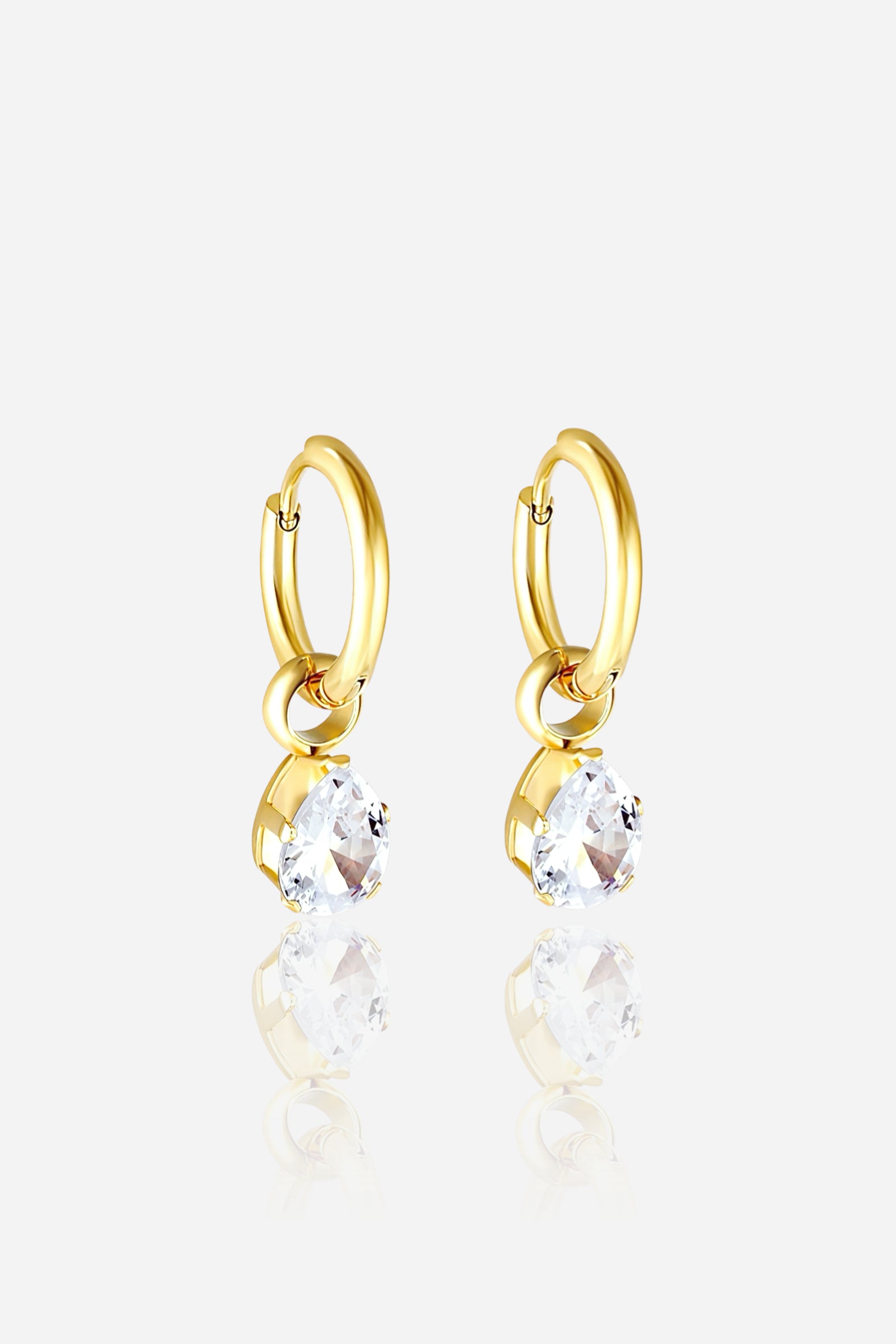
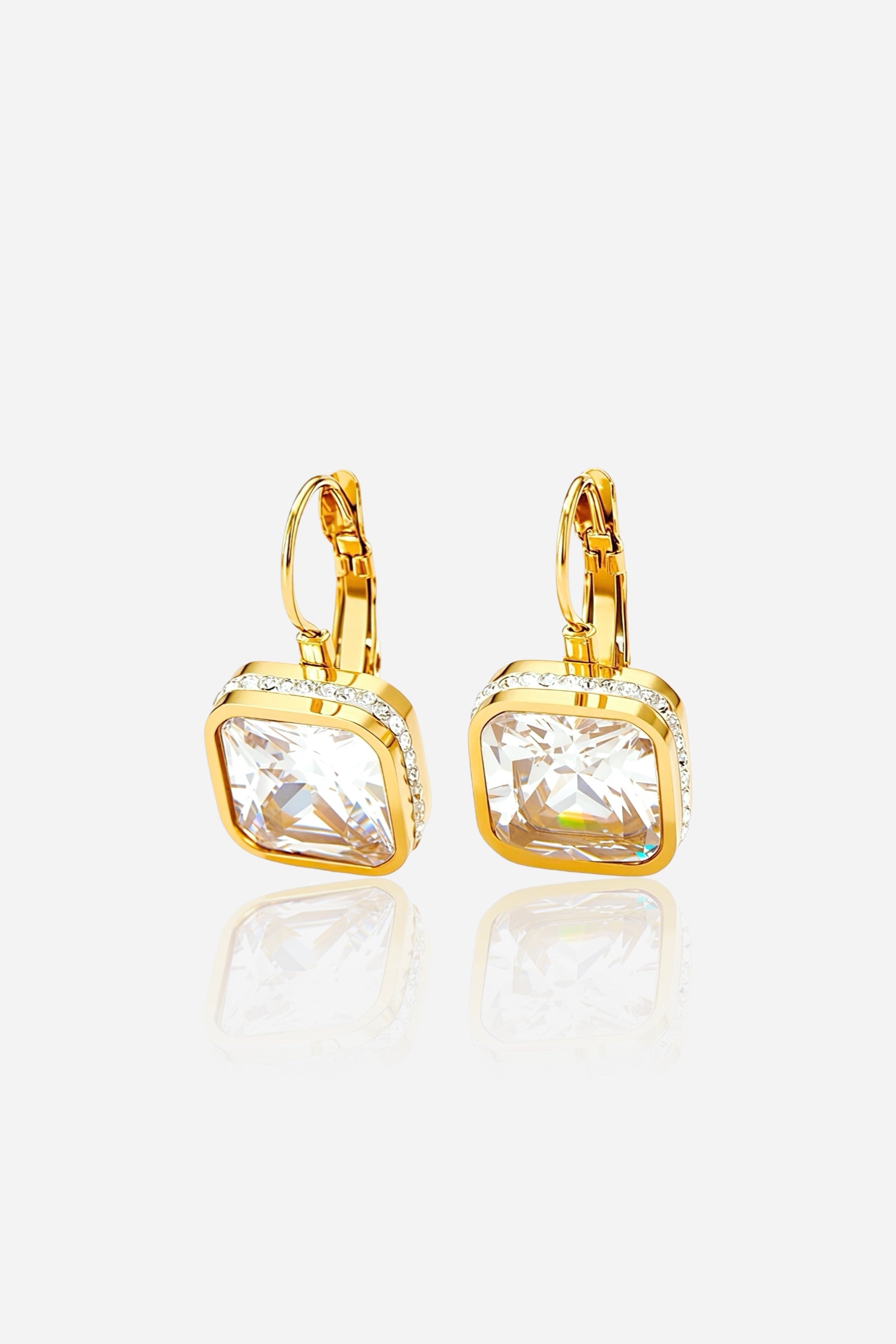
A versatile teardrop, an angular geometric drop, and a curved charm hoop. Each suits different face shapes for different reasons. All 18K PVD gold plated on 316L stainless steel.
Universally Flattering Earring Styles
Some earring shapes work across almost every face shape, which is useful when you want a reliable choice without thinking too hard about the framework.
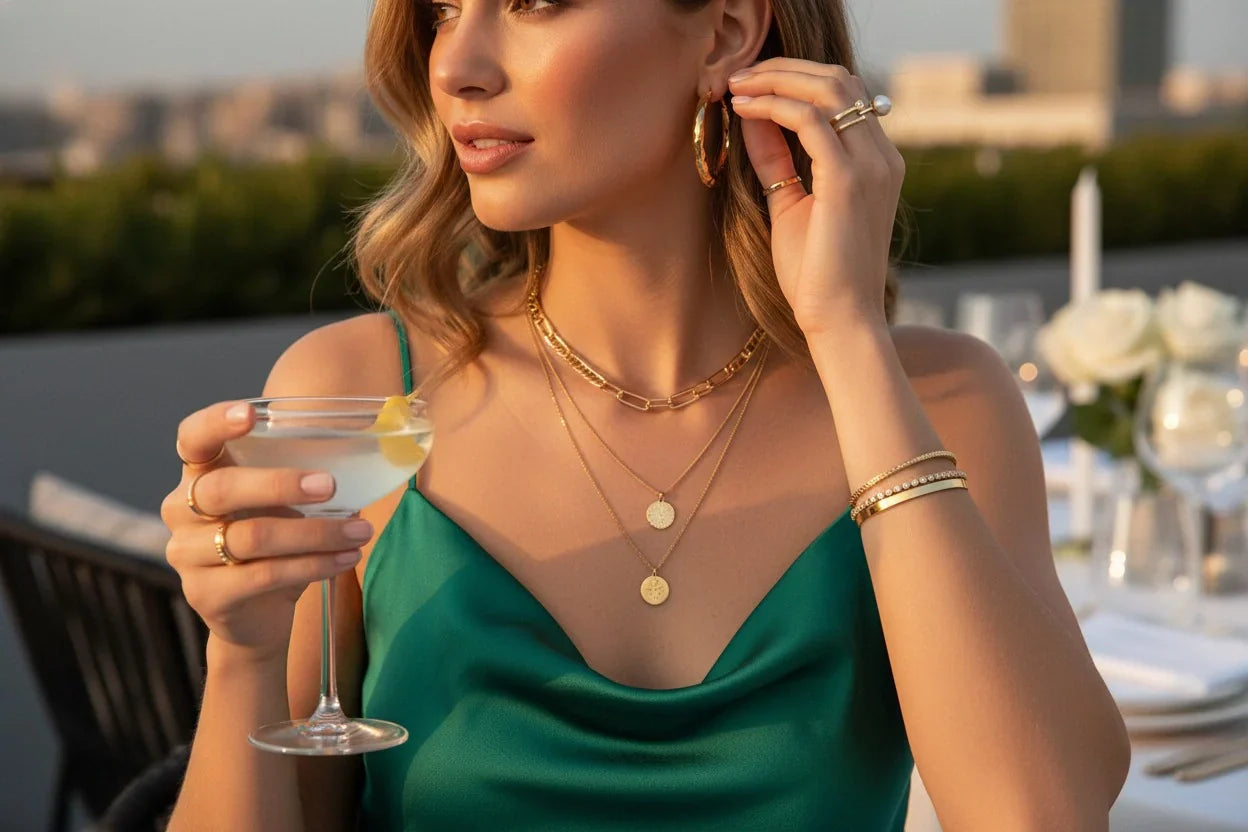
Small to medium hoops in 20 to 30mm sit close to the lobe and add gentle curve without dramatic length. They flatter most face shapes by adding subtle visual interest without amplifying any specific feature. The hoop earrings guide covers hoop sizing in detail.
Teardrop drop earrings have a soft pointed silhouette that lengthens slightly without being severe. They suit oval, round, square, and heart faces equally well, which is why teardrops have remained one of the consistent silhouettes in jewellery design across decades.
Classic studs in 5 to 7mm work for nearly everyone because they sit on the lobe without adding length, width, or strong visual lines. The stud is a reliable default when you are between face shapes or unsure which framework applies. The complete stud earrings guide covers stud sizing and styling in depth.
Stacking and Face Shape
If you stack earrings across multiple piercings, face shape still influences the choice of the anchor piece (the largest earring in the stack, usually at the lobe). Smaller pieces in higher piercing zones are less driven by face shape because they sit closer to the side of the head than the face itself.
For round and oblong faces, an anchor that adds length (like a teardrop or short drop) sets up the rest of the stack well. For square and heart faces, a curved or rounded anchor (like a charm hoop or pearl drop) softens the line near the jaw. For the broader stacking framework, see our earring stacking guide.
Other Factors That Matter
Face shape sits within a wider styling context. A few other factors shift earring choice in practice.
Hair styling affects how visible the earring is. Hair down can hide drops and dangles, which means a piece that flatters the face shape on paper can read as understated when the hair is in the way. Hair pulled back gives the earring full visibility and the face shape framework matters most in this context.
Neckline interacts with earring length, particularly for drops and dangles. The guide on styling statement earrings covers earring and neckline pairing in detail across V necks, crew necks, scoop necks and more.
Glasses add a horizontal line near the eyes that can compete with bold drops. People who wear glasses regularly often gravitate toward smaller hoops, studs, and short drops that do not crowd the visual space around the frames.
Occasion affects scale. A dramatic chandelier earring that flatters a heart face for evening would feel oversized for office wear. The face shape framework holds across occasions, but the scale shifts.
Personal aesthetic overrides the framework when you want it to. Plenty of round faces wear small round studs and look excellent. The face shape framework is a starting point, not a constraint.
Frameworks are useful. Personal style is the final word.
Length Considerations Across Face Shapes
Earring length deserves a separate note because length affects almost every face shape in similar ways. Longer earrings add vertical visual length to the face. Shorter earrings keep proportions as they are. Wider earrings add horizontal width.
This means face shapes that benefit from added length (round, oblong if you want to lean into it) suit longer earrings. Face shapes that benefit from added width (oblong if you want to balance it, diamond) suit shorter wider earrings. For more on length specifically, the drop and dangle earrings guide covers the length framework in depth.
GLISTIA offers a full earring range across studs, huggies, hoops, drops, dangles, and statement pieces, all crafted in 18K PVD Gold Plated on 316L surgical grade stainless steel. The range covers every face shape framework in this guide. Free Australian shipping on orders over $75 and standard 15 to 30 days returns through GLISTIA. Browse the full earrings collection, the 18K PVD gold plated collection, or waterproof jewellery for pieces built for everyday Australian wear.
Round faces tend to flatter long drop earrings, linear dangles, teardrops, and angular geometric earrings. The vertical line of a long drop visually elongates the face. Square, rectangular and triangular shapes add angular contrast that complements the soft round outline. Avoid round studs and wide circular hoops that echo the face roundness.
Square faces tend to flatter curved hoops, oval drops, sculptural pieces with rounded edges, and pearl drops. Hoops contrast the angular jaw beautifully. Charm hoops with rounded charms add gentle movement and curve. Avoid strict geometric shapes (sharp squares, rectangles, sharp triangles) that echo and amplify the angular jaw line.
Heart shaped faces tend to flatter teardrops, chandelier styles, and earrings wider at the bottom than the top. Pear shaped drops and triangle drops with the wide end down balance the narrower chin. Pearl drops and crystal drops in these silhouettes are particularly graceful. Avoid heavy studs or earrings wider at the top, which add weight to the already wider forehead.
Oval faces are considered the balanced shape that pairs with most earring styles. Studs, hoops of any size, drops, dangles, and statement pieces all work. If you have an oval face, treat earring choice as a personal aesthetic decision rather than a face shape decision. A consideration worth keeping in mind is that very long dangles can elongate an already long face further, so classic drops and medium hoops are reliable defaults.
Oblong faces tend to flatter round studs, medium curved hoops, cluster earrings, and short wider drops. The horizontal element of a hoop or wide drop adds visual width to a longer face. Studs with rounded shapes sit close to the cheek and create a softer overall effect. Avoid long linear drops and chandelier earrings that extend the visual length further.
Diamond faces tend to flatter teardrops with the wide end up, studs that fill the space along the jaw, chandelier earrings, and drops that flare outward at the bottom. Soft curved hoops that echo the jaw line also work well. Avoid strict geometric shapes and very long thin drops that compete with the angular cheekbones.
Small to medium hoops in 20 to 30mm, teardrop drop earrings, and classic studs in 5 to 7mm work across almost every face shape. These silhouettes have stayed in jewellery design for decades because they flatter a wide range of features without amplifying any specific one. They are reliable defaults when you are between face shapes or unsure which framework applies.
Find the Earrings That Flatter Your Face Shape
A full earring range in 18K PVD Gold Plated 316L surgical grade stainless steel. Studs, hoops, drops, dangles and statement pieces designed for Australian everyday wear.