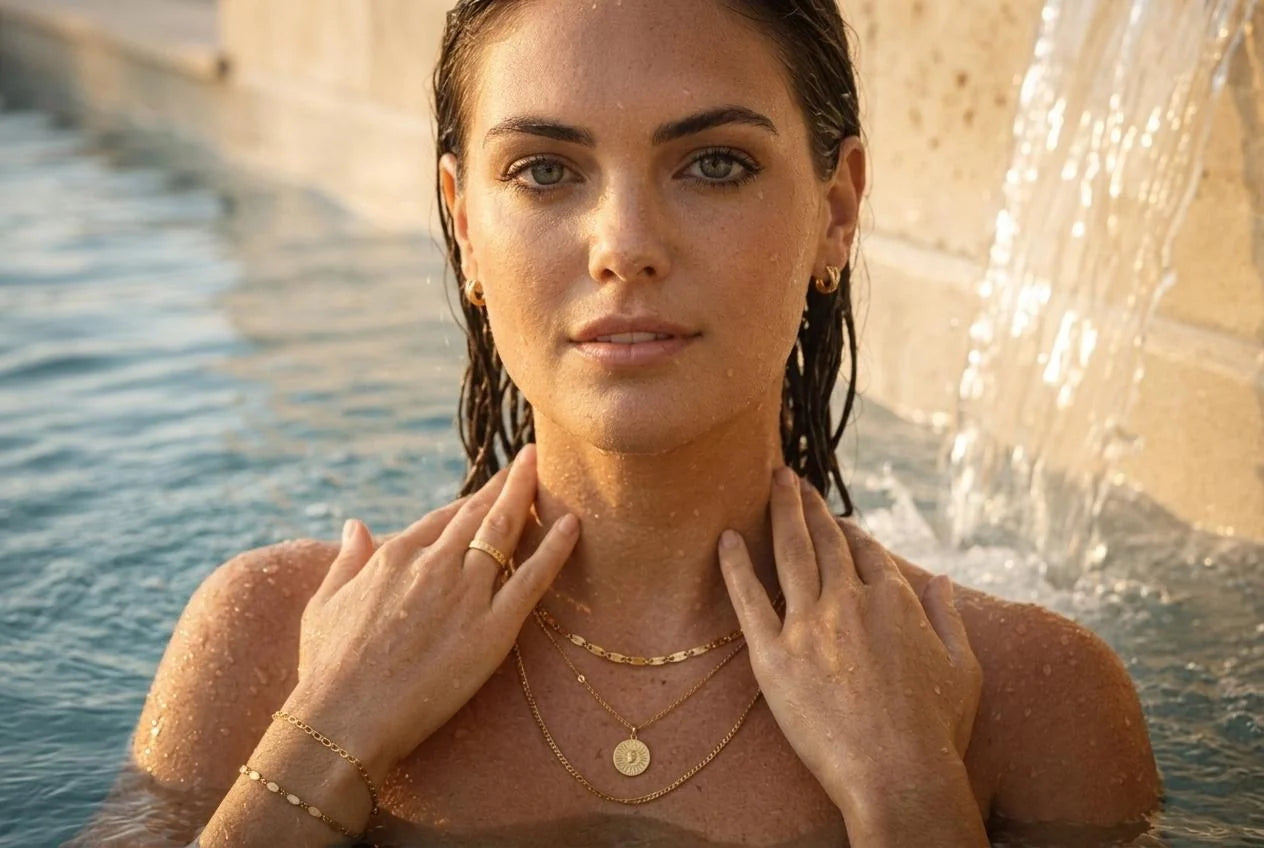
Can You Wear Jewellery in the Ocean? The Australian Swimmer's Guide
Australia has some of the best beaches in the world and most Australian women wear jewellery to them. The question is whether that jewellery can handle the ocean. Saltwater, sand and UV exposure are tough on most materials. This guide explains which jewellery survives ocean wear, what saltwater actually does to different metals, and how to keep your pieces looking great all summer long.
18K PVD gold plated stainless steel and solid stainless steel handle saltwater well and are suitable for ocean swimming. Standard gold plated jewellery, sterling silver and gold vermeil should not be worn in the ocean as saltwater accelerates damage to these materials.
What Saltwater Actually Does to Jewellery
Saltwater is more aggressive to most metals than plain water. The salt, minerals and natural acidity of seawater work together to speed up chemical reactions that cause corrosion and tarnishing. For materials that are already vulnerable to water, the ocean makes the problem significantly worse and faster.
For standard gold plated jewellery made over brass or copper, saltwater is particularly damaging. The salt accelerates the breakdown of the thin electroplated gold layer. It also speeds up the oxidisation of the brass or copper base once that layer has worn through. A piece that might last several months of regular showering could show visible damage after just a handful of ocean swims.
Sterling silver behaves similarly in saltwater. The alloy that makes up sterling silver reacts with the sulphur compounds present in seawater, causing the characteristic dark tarnishing that silver develops. Regular ocean exposure will cause sterling silver to tarnish noticeably faster than it would from air exposure alone.
Most women take their jewellery to the beach without thinking about what the ocean is doing to it. The material is everything. The right choice means you never have to take it off.
Which Jewellery Materials Handle the Ocean Well
Not all materials are created equal when it comes to saltwater. Here is an honest breakdown of how the most common jewellery materials perform in the ocean.
| Material | Ocean Safe? | What Saltwater Does | Care After Swimming |
|---|---|---|---|
| 18K PVD Stainless Steel | Yes | No corrosion. Finish holds well. | Rinse with fresh water |
| Solid Stainless Steel | Yes | No corrosion. Fully saltwater resistant. | Rinse with fresh water |
| Solid Gold (9K to 18K) | Yes | Gold does not corrode in saltwater. | Rinse with fresh water |
| Sterling Silver 925 | No | Tarnishes quickly in saltwater. | Avoid ocean exposure |
| Standard Gold Plated on Brass | No | Gold layer breaks down. Brass corrodes fast. | Avoid ocean exposure |
| Gold Vermeil | No | Gold layer wears. Silver base tarnishes. | Avoid ocean exposure |
| Titanium | Yes | Excellent corrosion resistance. | Rinse with fresh water |
Why 18K PVD Gold Plated Stainless Steel Works in the Ocean
The reason 18K PVD gold plated stainless steel performs well in saltwater comes down to the stainless steel base. Stainless steel contains chromium, which forms a passive oxide layer on the surface that actively resists corrosion. Unlike brass and copper, stainless steel does not react with the salt and minerals in seawater. It does not corrode. It does not pit. It does not discolour.
The PVD coating works with this rather than against it. Because the stainless steel base is inert in saltwater, the gold layer is never undermined from below by a reacting base metal. And because PVD bonding creates a significantly denser and more adherent coating than standard electroplating, the gold surface itself holds up better against the abrasive effects of sand and the mineral deposits left by saltwater.
This is why all GLISTIA pieces can be worn into the ocean. The waterproof jewellery collection is specifically designed for exactly this kind of daily Australian beach lifestyle use.
The One Habit Worth Building for Ocean Swimming
Even with genuinely waterproof jewellery, rinsing with fresh water after ocean swimming is a habit worth having. Here is why.
Saltwater leaves behind mineral deposits as it evaporates. If those deposits sit on the surface of your jewellery for extended periods, they can gradually build up and create a dull film over the finish. This is not damage in the traditional sense. It does not corrode the material or break down the coating. But it does affect how the piece looks over time if never rinsed.
A ten second rinse under fresh water after coming out of the ocean removes those deposits before they accumulate. It is the only maintenance step that makes a meaningful difference for waterproof jewellery at the beach.
GLISTIA waterproof jewellery is made for Australian summer. Earrings, necklaces, bracelets, rings and anklets you can wear straight into the ocean.
Shop Waterproof JewelleryJewellery for the Beach — Category by Category
Waterproof Earrings for the Beach
Earrings are the most common piece women wear to the beach. Small hoops, huggie earrings and studs are the most practical styles for swimming because they sit close to the ear and are less likely to catch on hair or water. All GLISTIA waterproof earrings are made from 18K PVD gold plated stainless steel and are built for exactly this. Wear them into the surf, rinse when you are done.
Waterproof Necklaces for the Beach
A fine layered gold plated necklace sitting against sun-kissed skin at the beach is one of the most effortlessly beautiful looks in Australian summer. Fine chains and pendant necklaces in 18K PVD gold plated stainless steel handle the ocean without any concern. The one practical tip is to secure the clasp before swimming so it does not drift forward.
Waterproof Anklets for the Beach
Anklets and the beach are a natural combination. They spend the most time in and around the water of any piece of jewellery at the beach, and they take the most direct exposure to sand and saltwater. This is exactly why the material matters most for anklets. GLISTIA waterproof anklets are made from 18K PVD gold plated stainless steel and are designed for this level of exposure. Wear them all summer without removing them.
Waterproof Bracelets and Bangles for the Beach
Bracelets and bangles at the beach move through sand, saltwater and sunscreen in every session. GLISTIA waterproof bracelets and bangles handle all of this. A quick rinse after swimming keeps them looking their best. Chain bracelets are the most practical beach style as bangles can collect more sand in their settings.
What About Pool Swimming?
Chlorinated pool water is handled equally well by 18K PVD gold plated stainless steel. Chlorine does not corrode stainless steel. The same rinsing habit that applies after ocean swimming applies after pool swimming. Rinse with fresh water to remove chlorine residue and keep the finish looking bright over time.
For a detailed look at showering and pool swimming with jewellery, see our guide on whether you can shower with gold plated jewellery. And for the complete overview of waterproof jewellery, our complete guide to waterproof jewellery in Australia covers everything.
About GLISTIA
GLISTIA is a Sydney-based jewellery brand making premium 18K PVD gold plated stainless steel jewellery for Australian women. Every piece is waterproof, tarnish resistant and built for daily Australian life including beach days, ocean swims and everything in between. The range covers gold plated earrings, gold plated necklaces, gold plated bracelets and bangles, gold plated rings and gold plated anklets. Dispatched from Sydney with free shipping on qualifying Australian orders.
Free shipping on qualifying Australian orders. 30-day returns. Dispatched from Sydney, NSW.
Shop the Waterproof CollectionFrequently Asked Questions
Can you wear jewellery in the ocean?
It depends on the material. 18K PVD gold plated stainless steel and solid stainless steel handle saltwater well and are suitable for ocean swimming. Standard gold plated jewellery on brass or copper, sterling silver and gold vermeil should not be worn in the ocean as saltwater accelerates damage to these materials.
Does saltwater damage gold plated jewellery?
Saltwater damages standard gold plated jewellery by accelerating the breakdown of the thin gold layer and causing the base metal to corrode. 18K PVD gold plated stainless steel is different because the stainless steel base is corrosion resistant and the PVD coating is far more durable than standard electroplating.
What jewellery can you wear to the beach in Australia?
The best jewellery for the beach is made from stainless steel or 18K PVD gold plated stainless steel. Both materials handle saltwater, sand and sunscreen without tarnishing or corroding. Rinse pieces with fresh water after swimming in the ocean to remove mineral deposits.
Should you rinse jewellery after swimming in the ocean?
Yes. Rinsing with fresh water after ocean swimming is a good habit even for waterproof jewellery. Saltwater leaves mineral deposits on surfaces over time. A quick rinse takes ten seconds and helps maintain the finish of your pieces long term.
Can you wear anklets to the beach in Australia?
Yes, if they are made from the right material. 18K PVD gold plated stainless steel and stainless steel anklets handle beach and ocean wear well. They handle saltwater, sand and daily wear without tarnishing. Rinse with fresh water after swimming for best results.