A complete Australian guide to layering necklaces. Chain spacing, pendant mixing, anchor pieces, and stack building principles for a curated layered look.
Layered necklaces are one of the strongest jewellery trends in Australia, and unlike many trends they have shown they are here to stay. The reason is that a well layered necklace stack does something a single necklace cannot. It adds visual depth, frames the neckline, and lets you mix the pieces that mean something to you. The challenge is that layering looks effortless when it works and chaotic when it does not. This guide walks through the principles that separate a curated stack from a tangled mess, with chain spacing, pendant mixing, anchor pieces, and step by step building you can apply tonight.
For the broader necklace category overview, our complete necklaces style guide covers all the necklace types and the length framework. This guide focuses specifically on the layering technique.
What Necklace Layering Actually Means
Necklace layering is wearing two or more necklaces together at different lengths to create a stacked vertical look on the chest. The aim is a coordinated set of pieces where each chain has its own visible space and each pendant has its own moment.
Layering is not just stacking similar necklaces. The defining feature is intentional variation. Different lengths so each chain sits at a different point on the chest. Different visual weight so the eye moves naturally between layers. Different roles so one piece anchors the look while others support it. When done well, the stack reads as styled rather than scattered.
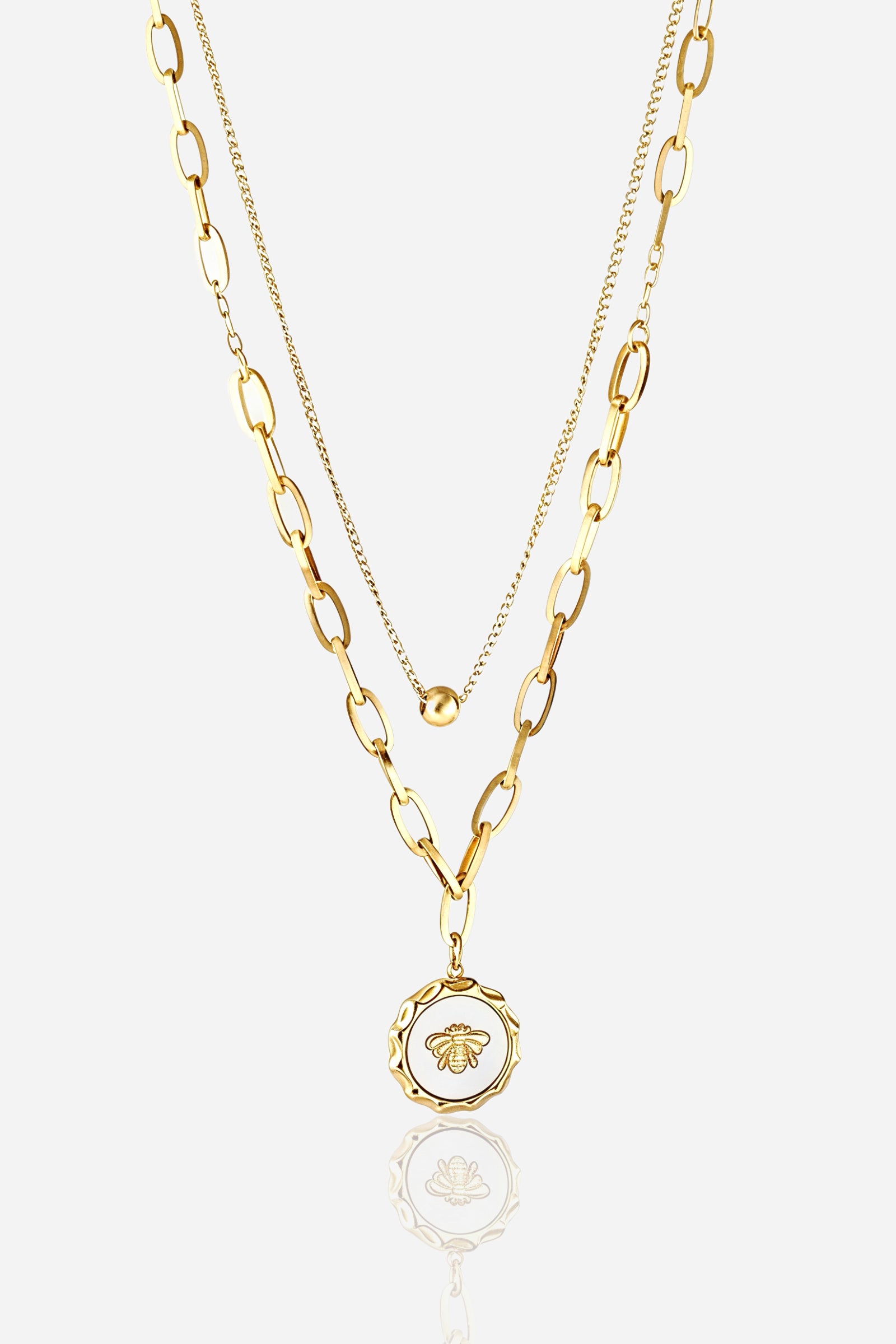
There are two ways to layer. The first is using a pre styled layered necklace where the chains are attached to a single clasp and designed to sit at fixed lengths. The second is building your own stack from individual necklaces of different lengths. Both have their place, and many people use a combination of the two.
A great layered look is not three necklaces fighting for attention. It is three necklaces having a conversation.
The Six Principles of Layering
The single rule that does much of the work. Each chain needs its own visible space, which means at least 4 to 5cm difference between adjacent layers. A common framework is a 40cm choker, a 45cm princess, and a 50cm matinee. The visible gaps between layers prevent tangling and let each chain be seen as its own piece.
An anchor piece is the focal point of the stack. Usually a pendant, an initial necklace, a birthstone, or a heart pendant. The anchor sits at the visual centre of the look and the other layers support it without competing. A stack with no anchor reads as scattered. A stack with two anchors reads as confused.
Two identical plain chains stacked together read as repetitive. A plain cable chain layered with a beaded chain or a snake chain reads as considered. Vary the link style, the chain weight, or the texture between layers to keep the eye moving across the stack.
Mixing gold and silver in a layered stack can work for advanced styling, but the look reads cleaner when every piece in the stack shares a metal tone. The same principle applies when stacking earrings, covered in detail in our earring stacking guide. The shared 18K PVD Gold Plated finish across the GLISTIA range makes building a coordinated stack straightforward, because every piece shares the same warm gold tone.
More than four chains on the chest starts to lose individual elements in the visual noise. Two to three is the sweet spot for everyday wear. Three to four works for evening or styled looks. Beyond that, the stack becomes a single visual mass rather than a layered composition.
A subtle two layer stack of fine chains works for office wear and everyday styling. A bold three or four layer stack with a statement pendant suits evening and event dressing. The framework holds across occasions, but the scale shifts to fit the context.
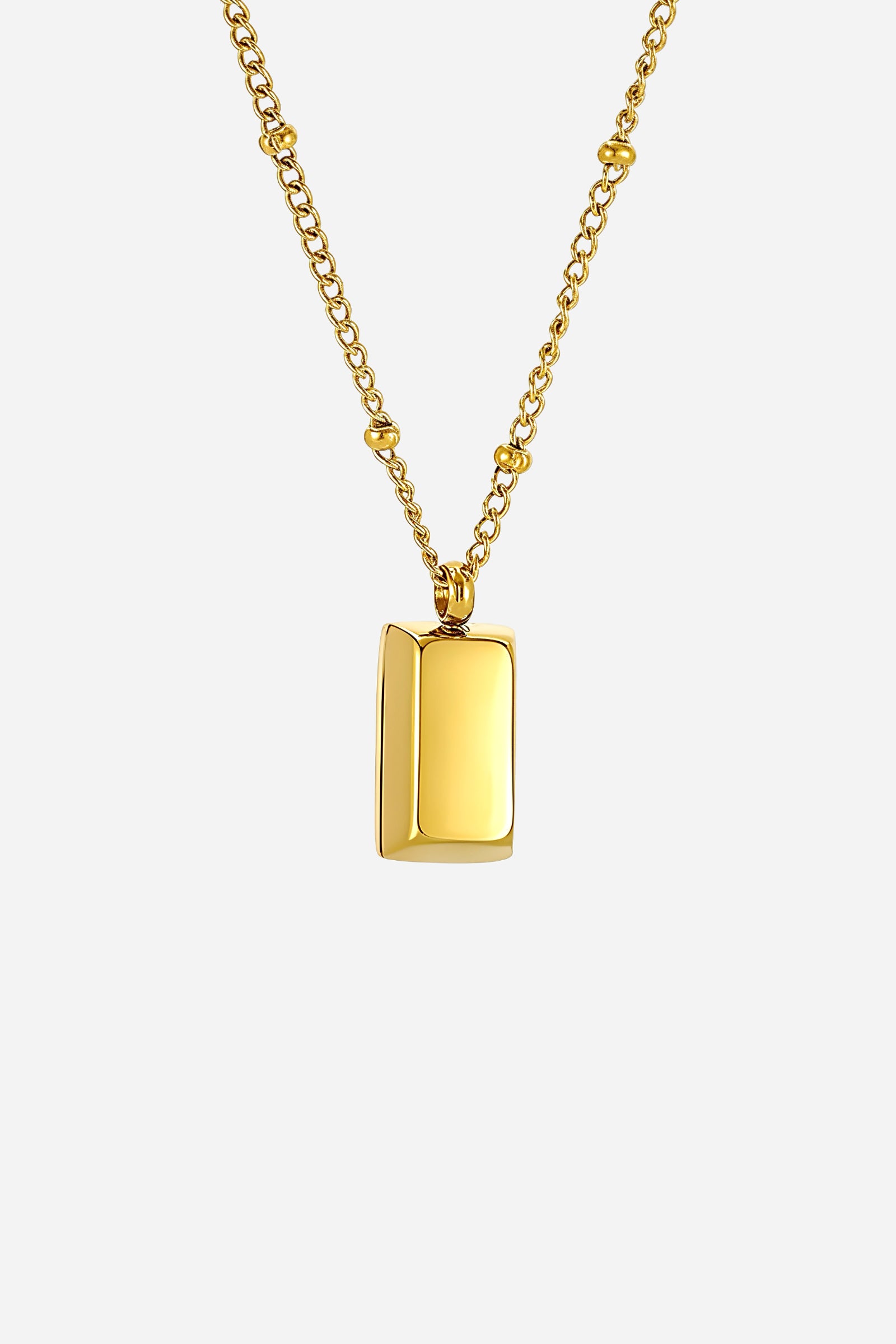
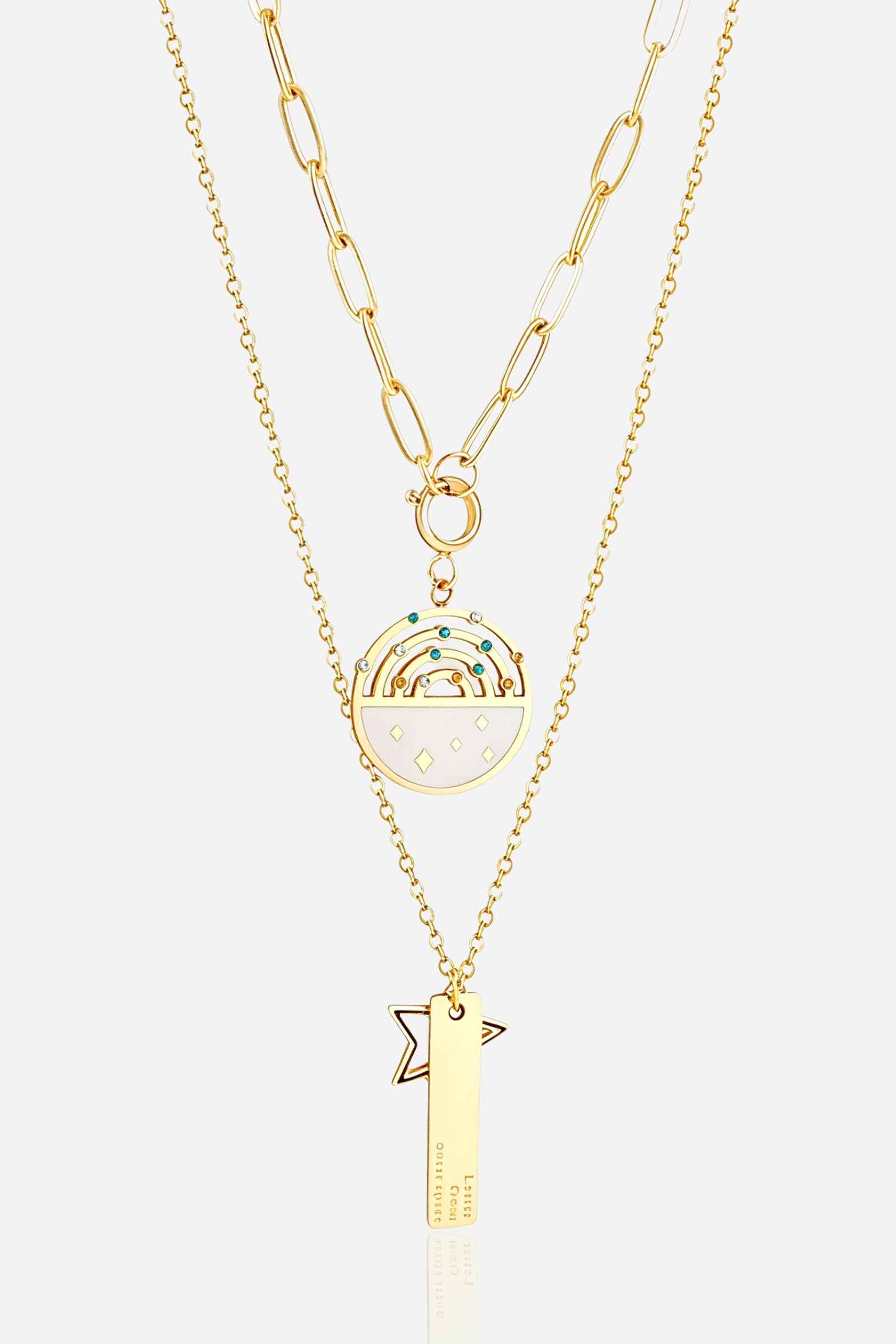
A pre styled layered necklace, a minimalist building block, and a charm layered piece from the necklaces collection. All 18K PVD gold plated on 316L stainless steel.
Building Your First Layered Stack Step by Step
If you have never layered necklaces before, working through these steps gives you a reliable starting framework rather than guessing.
Start with the necklace that means something to you. Often this is a pendant, an initial, a birthstone, or a heart pendant. The anchor sits at princess length (43 to 48cm) where pendants are designed to fall, and everything else builds around it.
A simple plain chain at 40cm sits just above the anchor. Choose a fine cable chain or a slim snake chain so it does not compete visually with the pendant below. This second layer adds depth without drawing attention.
For a fuller stack, add a longer chain at 50cm or more. A second pendant at this length can work, or a plain chain to keep the eye on the original anchor. Three layers is the comfortable upper limit for everyday wear.
Before settling on the stack, check the visible gaps between layers. There should be a clear 3 to 5cm of skin or fabric between adjacent chains. If two chains are sitting on top of each other, adjust the lengths.
Quick sanity check that all chains and pendants share the same metal finish. 18K PVD Gold Plated pieces share the same warm gold tone, so any combination from the GLISTIA gold plated range works together by default.
Curated Stack Combinations
If picking your own combination feels overwhelming, these starting points cover the common aesthetic directions.
Two layers. A plain 40cm chain above a 45cm chain with a small pendant. No additional charms, no statement pieces. Reads as understated and works with workwear, smart casual, and weekend dressing. The simplest way to start layering.
Three layers. A plain 40cm chain at the top, an initial necklace at 45cm in the middle, and a heart pendant at 50cm at the bottom. Every piece carries meaning. Perfect for daily wear and as a thoughtful gift bundle.
Three layers. A choker at 40cm, a bar pendant at 45cm, and a longer matinee chain at 55cm. Geometric shapes throughout. Suits monochrome wardrobes, tailored pieces, and contemporary aesthetics.
Three layers. A simulated pearl bar necklace at 42cm, a heart pendant at 47cm, and a fine plain chain at 52cm. Pearls and heart motifs together. Suits brunch, weddings, date night, and gift styling.
Three to four layers. A pre styled layered necklace as the foundation, plus one or two additional chains stacked above or below. Brings depth and presence to evening and event dressing while keeping the styling cohesive.
Layering with Different Necklace Types
Each necklace type plays a slightly different role in a stack.
Pendant necklaces work as anchor pieces. Place them at princess length (around 45cm) where the pendant naturally falls, and build other layers around them.
Initial necklaces work as either anchor or supporting layer. Worn alone, an initial reads as personal. Layered with a plain chain above, the initial gains additional context as part of a curated stack.
Birthstone necklaces sit beautifully as the middle layer between two plain chains, where the stone catches light against the metal of the surrounding layers.
Heart necklaces work as anchor pieces, particularly in romantic and sentimental layered combinations. They also pair well with initial necklaces in gift bundles.
Pearl necklaces add textural variety to a layered stack. A simulated pearl bar or beaded pearl necklace as one layer creates a contrast against plain metal chains.
Chain necklaces are the building blocks of any custom stack. Cable, snake, box, figaro, rope and curb chains all work as layering elements. Mix the link styles for visual interest.
Pre styled layered necklaces can either stand alone as a complete look or serve as the base for additional layering. They are a good starting point for anyone new to layering because the chain spacing is already considered.
Common Layering Mistakes to Avoid
A few patterns make a layered stack feel off without it being obvious why.
Chains sitting too close together. If two layers are within 1 to 2cm of each other, the eye reads them as a single thicker chain rather than two separate layers. Always keep at least 4 to 5cm between adjacent layers.
Two competing pendants at the same length. If two pendants sit near each other, they fight for visual attention. Either separate them with at least 5cm of space, or make one of them a plain chain.
Mismatched metal finishes accidentally. Gold plated and silver tone pieces in the same stack can read as unintentional rather than styled. Either commit fully to one metal or use the contrast as a deliberate accent (one piece in the contrasting metal among three matching pieces).
Too many layers. Five or more chains on the chest at once tends to lose the layered effect entirely and read as a single visual mass. Two to three is the comfortable everyday range, three to four works for evening.
Forgetting the neckline. A layered stack that works against a V neck might disappear inside a crew neck or tangle with a turtleneck. Always check how the stack interacts with what you are wearing.
Care for Layered Necklaces
Layered necklaces need a little more attention than single necklaces because tangling and knot formation are more likely.
Store hanging or separated. Loose storage in a jewellery box guarantees tangling. A jewellery stand with hooks lets each necklace hang individually. A flat lined tray with separate compartments works equally well.
Take them off in the order they went on. Removing layered necklaces in reverse order helps prevent the chains tangling around each other during removal. Take off the longest first, then the middle, then the shortest.
Untangle gently. If chains do tangle, work them apart slowly with fingertips rather than pulling. A small amount of baby powder or talc on a tangled section can help the links slide apart.
Water and showers are fine for quality materials. 18K PVD Gold Plated stainless steel necklaces handle daily showers without issue. For more on which necklace materials hold up to daily Australian wear, our gold plated necklaces guide covers the technical detail. For pieces specifically built for water exposure, the waterproof jewellery collection covers the dedicated water resistant range.
Wipe each layer with a soft cloth. A quick wipe with a microfibre cloth at the end of the day removes skin oils and product residue from each chain individually. This habit keeps every layer looking fresh.
GLISTIA carries pre styled layered necklaces and individual chains designed to layer together. The shared 18K PVD Gold Plated finish across the range makes building a coordinated stack straightforward. Free Australian shipping on orders over $75 and standard 15 to 30 days returns through GLISTIA. Browse the layered necklaces collection, the broader necklaces collection, the 18K PVD gold plated collection, or waterproof jewellery for stacks built for daily Australian wear.
Two to three necklaces is the comfortable everyday range. Three to four works for evening and event dressing. Five or more starts to lose the layered effect because individual elements blur into a single visual mass. Beginners typically get strong results from a two layer stack, then add a third once the spacing feels comfortable.
A reliable framework is a 40cm choker, a 45cm princess length, and a 50cm matinee. The 5cm gaps between layers prevent tangling and let each chain be seen. For a longer fuller stack, add a 55cm or 60cm chain as the bottom layer. The minimum spacing rule is 4 to 5cm between adjacent layers.
Vary the lengths by at least 4 to 5cm between adjacent chains so each one has its own visible space. Use chains with smooth links rather than rough textured ones, which catch on each other less. Store layered necklaces hanging or in individual pouches when not worn, and take them off in reverse order of how they went on.
It can work, but the look reads cleaner when every piece in the stack shares a metal tone. If mixing, use one dominant metal (eg gold for two of three pieces) with the contrasting metal as a deliberate accent. Avoid splitting the stack 50 to 50 between gold and silver, which usually reads as unintentional rather than styled.
An anchor piece is the focal point of the stack, usually a pendant, initial, birthstone, or heart pendant. The anchor sits at princess length (around 45cm) where pendants are designed to fall, and supporting layers (plain chains, additional pendants) are built around it. A stack with no anchor reads as scattered. A stack with two anchors reads as confused.
They serve different purposes. Pre styled layered necklaces have the chain spacing already worked out, which makes them ideal for anyone new to layering or who does not want to manage multiple individual pieces. Building your own stack gives you full control over the combination and lets you mix pieces that mean something to you. Many people use a combination of both, layering an additional chain or pendant over a pre styled piece.
Yes, particularly two to three layer combinations of lightweight pieces. Quality 18K PVD Gold Plated stainless steel layered necklaces stack comfortably for extended wear because the construction stays light even with multiple chains. For daily wear, removing the stack at the end of the day and storing the pieces separately keeps everything in good condition long term.
Build Your Layered Necklace Stack
A full necklace range in 18K PVD Gold Plated 316L surgical grade stainless steel. Pre styled layered pieces and individual chains designed to layer together.