Your Australian guide to pendant necklaces. Pendant types, sizing, chain pairing, neckline matching and care for everyday wear.
Pendant necklaces are the foundation piece in most jewellery collections. A single chain with a decorative element at the centre, designed to draw the eye to a focal point. The format has remained consistent across decades because it works. The pendant carries the meaning, the chain quietly supports it, and the whole piece sits comfortably across most outfits and occasions. This complete guide covers the main pendant types, how to choose a pendant size, which chain to pair with which pendant, how pendants interact with necklines, and how to care for them so they keep their finish through years of wear.
For broader context, our complete necklaces style guide covers all necklace categories, and our layering guide covers how pendants work as anchor pieces in stacked looks. This guide focuses specifically on pendant necklaces as standalone pieces.
What Defines a Pendant Necklace
A pendant necklace has three components. A chain that loops around the neck, a bail or loop that holds the pendant, and the pendant itself. The pendant is the decorative element, ranging from simple polished metal shapes through to gemstones, religious symbols, initials, hearts, and figurative motifs. The chain is the supporting structure. The bail is the small ring or loop where the pendant slides onto the chain.
What makes a pendant necklace different from other necklace types is that the pendant is the entire visual point. Other necklace categories build value from chain texture, multiple chains, or beaded elements. A pendant necklace puts the focal element at the centre and lets everything else stay quiet.
The chain is a frame. The pendant is the picture. The whole thing works when both know their role.
The Main Pendant Types
Pendant designs range widely. The categories below cover the patterns that recur across most jewellery collections.
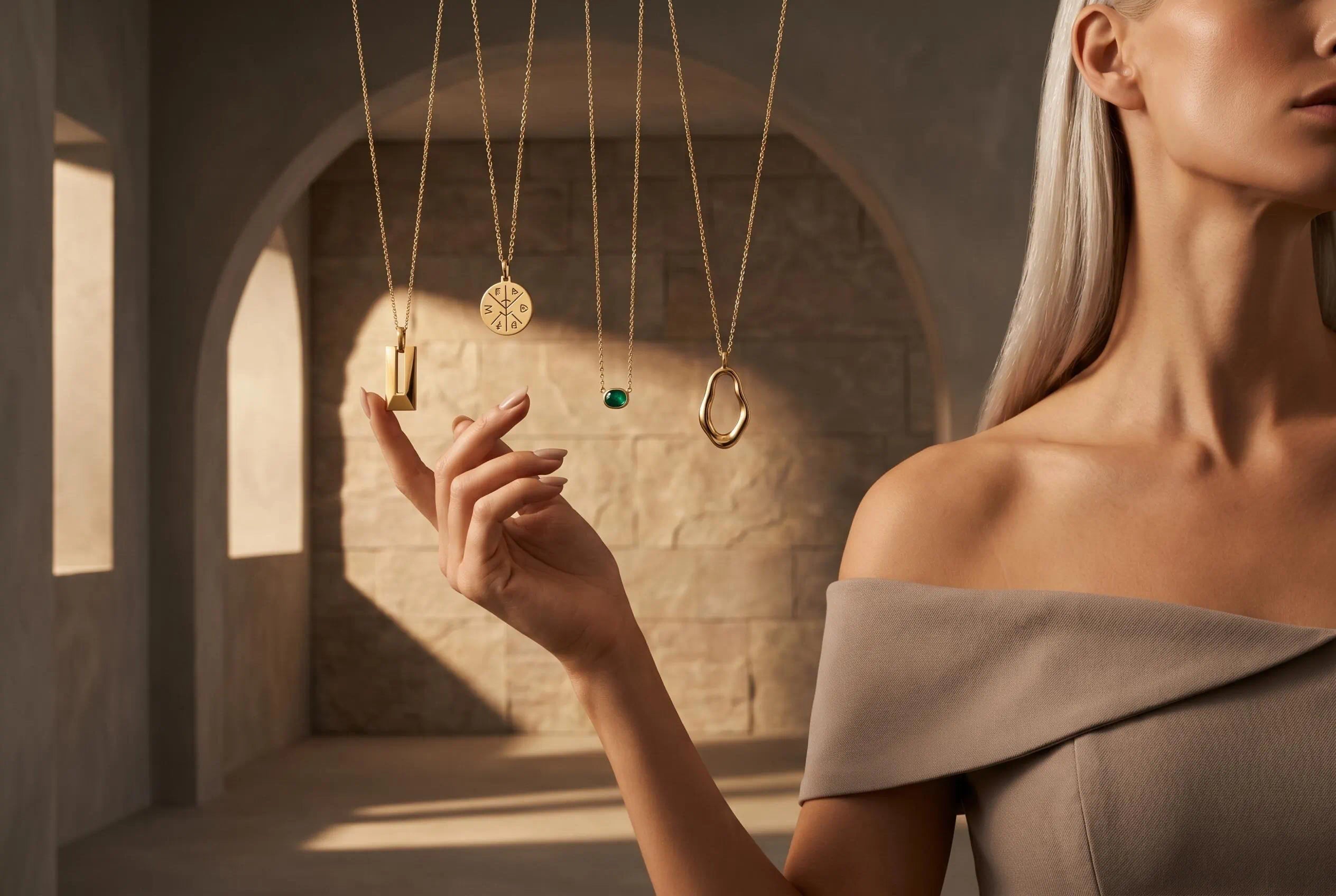
Pendants featuring a recognisable shape with cultural or personal meaning. Crosses, stars, moons, bows, infinity symbols, hearts. These pendants carry significance beyond decoration and often become heirloom pieces.
Pendants in clean architectural shapes. Bars, circles, squares, hexagons, triangles, interlinked rings. Suits modern minimalist styling and pairs well with tailored wardrobes.
Pendants featuring a faceted crystal or coloured gemstone as the centre element. Includes solitaire crystals, halo settings, baguette crystals, and birthstone style pieces. Adds sparkle without needing a complex setting.
Pendants featuring a single letter, usually a personal or meaningful initial. Worn alone as a personal piece or layered with plain chains. Among the popular gift categories because the personalisation gives the piece sentimental weight.
Pendants featuring a heart motif, ranging from simple polished hearts through to dual sided hearts, crystal accented designs, and double hearts. A staple for romantic and sentimental gifting.
Pendants featuring simulated pearls, either as a single bar, a centred pearl, or pearl accents with crystal detailing. Modern pearl pendants suit everyday wardrobes rather than being reserved for formal occasions.
Pendants in the shape of recognisable objects or motifs. Bees, butterflies, flowers, leaves, animals, celestial designs. Brings personality and a hint of storytelling to daily jewellery.
Long thin metal bars or rectangular plates as the pendant. Minimalist and contemporary, often engravable. Suits modern wardrobes and works particularly well as a layering anchor.
Pendant Sizing Framework
Pendant size is measured by the longest dimension of the pendant element itself, not including the chain. The size affects how the pendant reads on the chest and how easily it pairs with different outfits.
Small dainty pendants for layered styling or minimalist looks. Reads as subtle. Suits anyone who wants pendant detail without the pendant becoming the focus of the outfit.
The reliable everyday pendant size. Visible without dominating the outfit. Suits work, casual and evening wear equally. The sensible default when you are unsure.
A bolder pendant that becomes a clear focal point of the outfit. Suits dressier looks, evening wear, and anyone who wants the pendant to read as a deliberate accessory choice.
Pendant carries the entire look. Reserved for evening, events, and styled looks where the pendant is the centrepiece of the outfit. Less suited to daily casual wear.
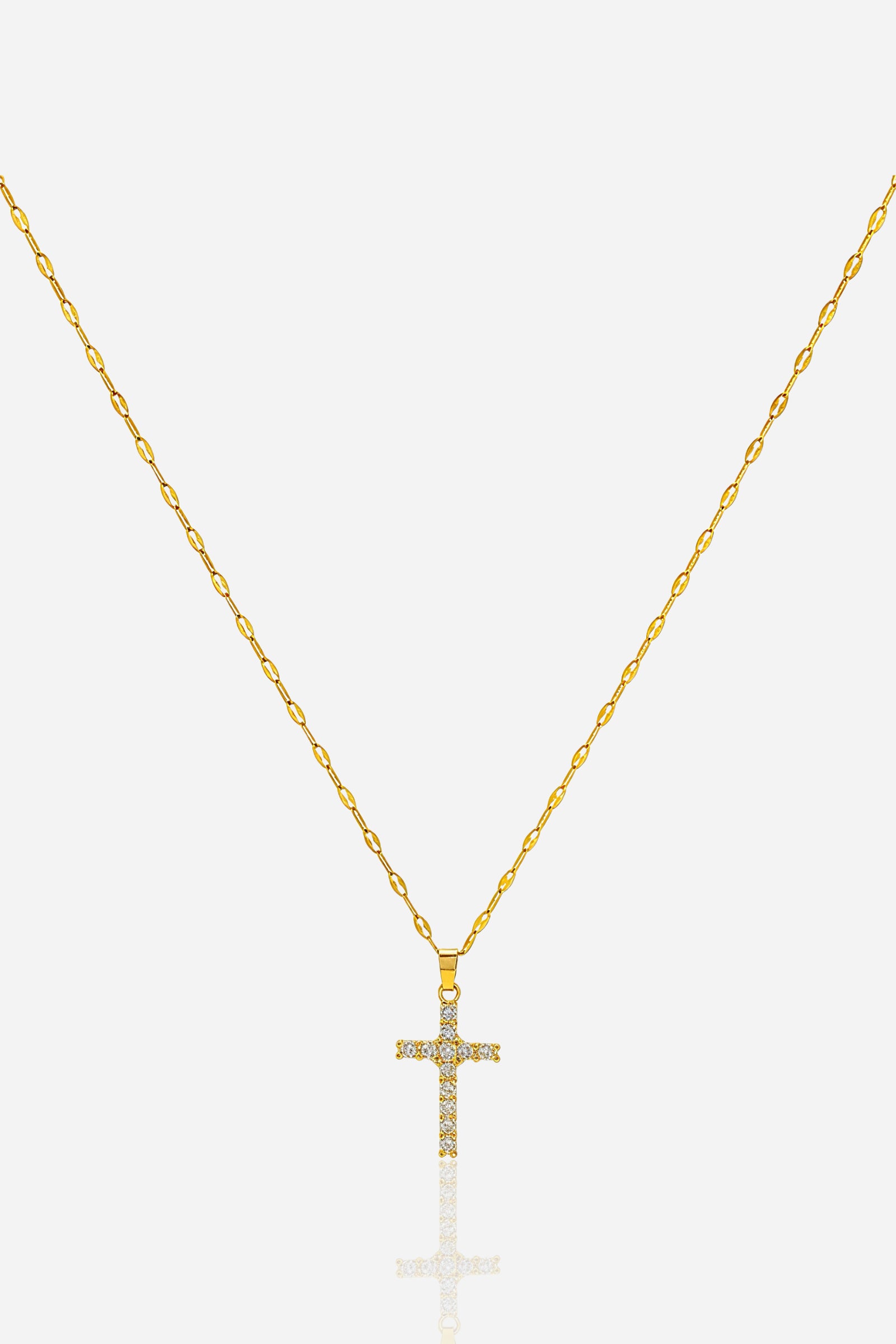
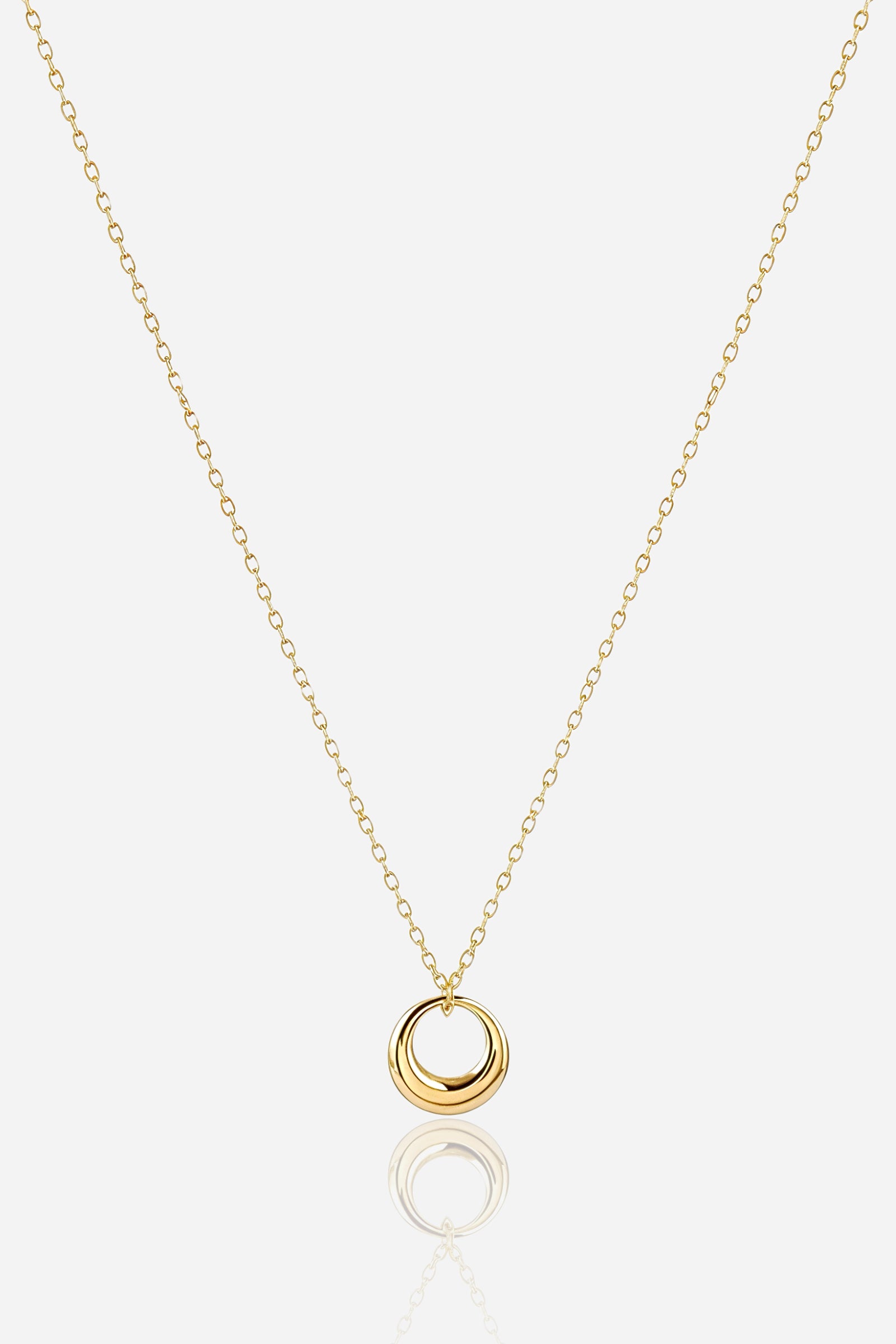
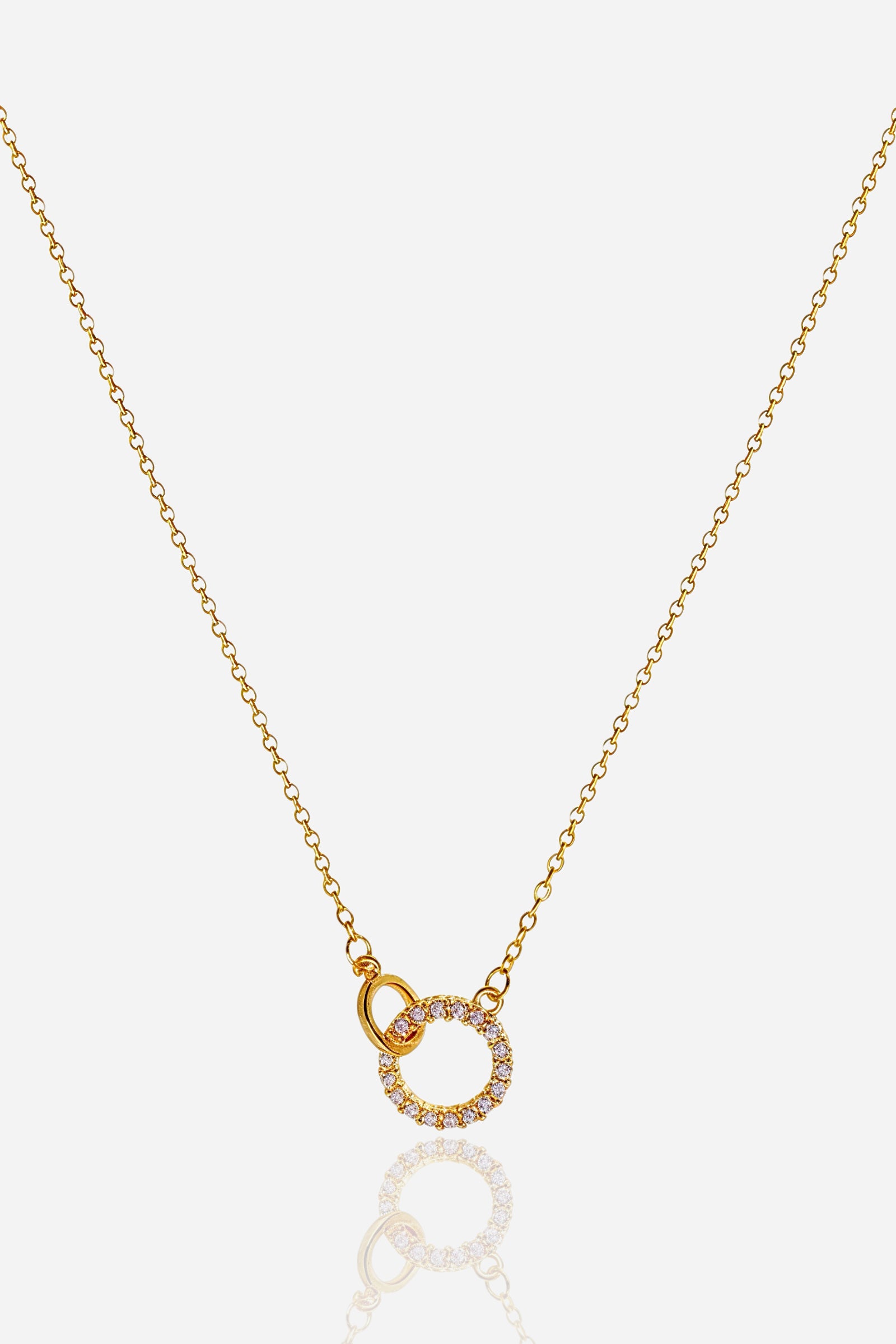
A crystal cross, a sleek circle, and an interlinked geometric design from the pendant necklaces collection. All 18K PVD gold plated on 316L stainless steel.
Pairing the Right Chain with Your Pendant
The chain holding the pendant matters as much as the pendant itself. The chain weight, link style and length affect how the pendant sits and how the whole necklace reads.
Simple oval or round links connected in a continuous line. The general purpose chain that pairs cleanly with almost every pendant style. Reliable everyday choice when in doubt.
Tight smooth tubular chain that catches light evenly across its surface. Pairs well with delicate pendants because the chain itself adds visual interest without competing. Common for initial pendants and small symbol pendants.
Square shaped links that create a clean geometric line. Suits geometric and architectural pendants well, since the chain echoes the angular feel of the pendant.
A chain made of small spheres rather than flat links. Adds gentle texture along the chain itself. Pairs beautifully with minimalist pendants like crescent moons or small bars where the chain becomes part of the look.
Heavier link styles with more visual presence. Suits chunkier and bolder pendants. Avoid pairing with delicate pendants where the chain visually dominates the centrepiece.
Twisted style chain with a textured rope appearance. Reads more decorative than plain cable or snake chains. Suits statement pendants and works particularly well with classic and slightly traditional pendant designs.
The general rule is to match the chain weight to the pendant weight. A delicate pendant on a thick chain looks unbalanced. A bold pendant on a fine chain looks unsupported. Pair scale with scale.
Pendant Necklaces by Occasion
Petite to classic size pendants (under 18mm) work cleanly with workwear. Geometric pendants, simple bars, and small symbol pendants suit professional settings without drawing strong attention. Skip statement size pendants unless your workplace culture supports bolder styling.
Classic size pendants (10 to 18mm) are the daily wear sweet spot. Worn over a tee, with denim, or with a simple knit. Initial pendants, heart pendants, and small symbol pendants all read well in everyday contexts.
Statement size pendants (18 to 28mm) shine in evening contexts. Crystal pendants, larger symbol pendants, and bold geometric designs all work. Pair with a V neck or off shoulder top to give the pendant clear visual space.
Crystal pendants, simulated pearl pendants, and elegant symbol pendants in classic to statement sizes all suit formal settings. Match the formality of the dress code with the formality of the pendant.
Pendant necklaces are among the popular jewellery gift categories because they suit almost every recipient. Initial pendants, heart pendants, and birthstone style pendants are particularly strong gift choices because the personalisation gives the piece sentimental value.
Pairing Pendants with Necklines
The neckline of your top determines how visible the pendant is and how it reads against the rest of the outfit. The general framework is simple. The pendant should sit in clear visual space, not against fabric or against the collar line.
V neck and plunging necklines are the natural home for pendant necklaces. Princess length pendants follow the V line beautifully. Statement pendants in V necks read as deliberate styling. Crew necks and round necks suit pendants that sit just below the neckline (princess length, around 45cm). Avoid shorter pendants that disappear into the collar. Scoop necks are versatile with most pendant styles. The curved neckline echoes the curved chain shape and creates a natural frame. Off shoulder and strapless tops are an open canvas. Pendants of any size work because there is no fabric to compete. Turtlenecks and high necks suit longer pendants on matinee chains (50 to 60cm) that sit clearly below the collar.
Caring for Pendant Necklaces
Pendant necklaces benefit from the same care as other necklaces, with a couple of additions because of the bail and pendant attachment.
Apply products first, necklace last. Perfume, sunscreen and hair spray contain chemicals that build up on metal finishes and gemstone surfaces. Apply these first, wait until they dry, then put the necklace on last.
Wipe with a soft cloth after wear. A microfibre cloth wipe at the end of the day removes skin oils and product residue. For crystal and gemstone pendants, this also keeps the stone surface bright.
Check the bail occasionally. The bail is the small loop where the pendant attaches to the chain. With repeated wear, the bail can rotate slightly out of alignment. A gentle adjustment back into position keeps the pendant facing forward.
Store flat or hanging. Loose storage tangles chains and scratches pendant surfaces against other pieces. A jewellery stand, lined tray, or individual soft pouch keeps each pendant in good condition. For more on materials and durability, our gold plated necklaces guide covers the technical detail.
Water exposure with quality materials. 18K PVD Gold Plated stainless steel pendants handle daily showers without issue. Drying gently after water exposure helps maintain the finish over time. For pieces specifically built for water, the waterproof jewellery collection covers the dedicated water resistant range.
GLISTIA carries a wide pendant necklace range in 18K PVD Gold Plated 316L surgical grade stainless steel, including symbol, geometric, crystal, initial, heart, pearl, figurative and bar pendants. Free Australian shipping on orders over $75 and standard 15 to 30 days returns through GLISTIA. Browse the full pendant necklaces collection, the broader necklaces collection, the 18K PVD gold plated collection, or waterproof jewellery for pieces built for daily Australian wear.
A classic size pendant (10 to 18mm) is the reliable first pendant. Visible without dominating the outfit, suits work, casual and evening wear equally, and pairs comfortably with most necklines. From there you can explore petite pendants for layered looks or statement sizes for evening and event dressing.
A pendant is a single decorative element designed to be the centrepiece of a necklace, attached to the chain through a fixed bail. A charm is typically smaller and designed to be worn alongside other charms, often on a charm bracelet or as one of many small accents on a necklace. Pendants stand alone. Charms work in groups.
Fine cable chains and snake chains pair cleanly with delicate pendants. The fine chain supports the pendant without competing for visual attention. Avoid heavier chain styles like figaro or curb, where the chain weight visually overwhelms a delicate pendant. The general rule is to match the chain weight to the pendant weight.
Quality pendant necklaces made from 18K PVD Gold Plated stainless steel handle daily showers without issue. Both the chain and the pendant are designed for water exposure. Drying gently with a soft cloth after the shower helps maintain the finish over time. For pieces specifically tested for daily water exposure, the GLISTIA waterproof jewellery collection covers the relevant range.
Princess length (43 to 48cm) is the everyday default for pendant necklaces. Pendants are designed to fall just below the collarbone at this length, where they sit cleanly across most necklines. For longer styling over a tee or knit, matinee length (50 to 60cm) works well. For chokers or layering, 40cm sits high on the neck.
Yes. Pendant necklaces are usually the anchor piece in a layered necklace stack. The pendant becomes the focal point and other layers (plain chains, additional pendants at different lengths) build around it. For the full layering framework, see our complete necklace layering guide.
Pendant necklaces made on 316L surgical grade stainless steel with 18K PVD gold plating are generally suitable for most wearers with sensitive skin. The 316L base meets international standards for low nickel release, and the 18K gold plating is typically formulated without nickel in reputable manufacturing. Individual sensitivity varies, so if any irritation occurs the piece should be removed immediately.
Find Your Everyday Pendant
A full pendant necklace range in 18K PVD Gold Plated 316L surgical grade stainless steel. Symbol, geometric, crystal, initial, heart and pearl pendants for daily Australian wear.