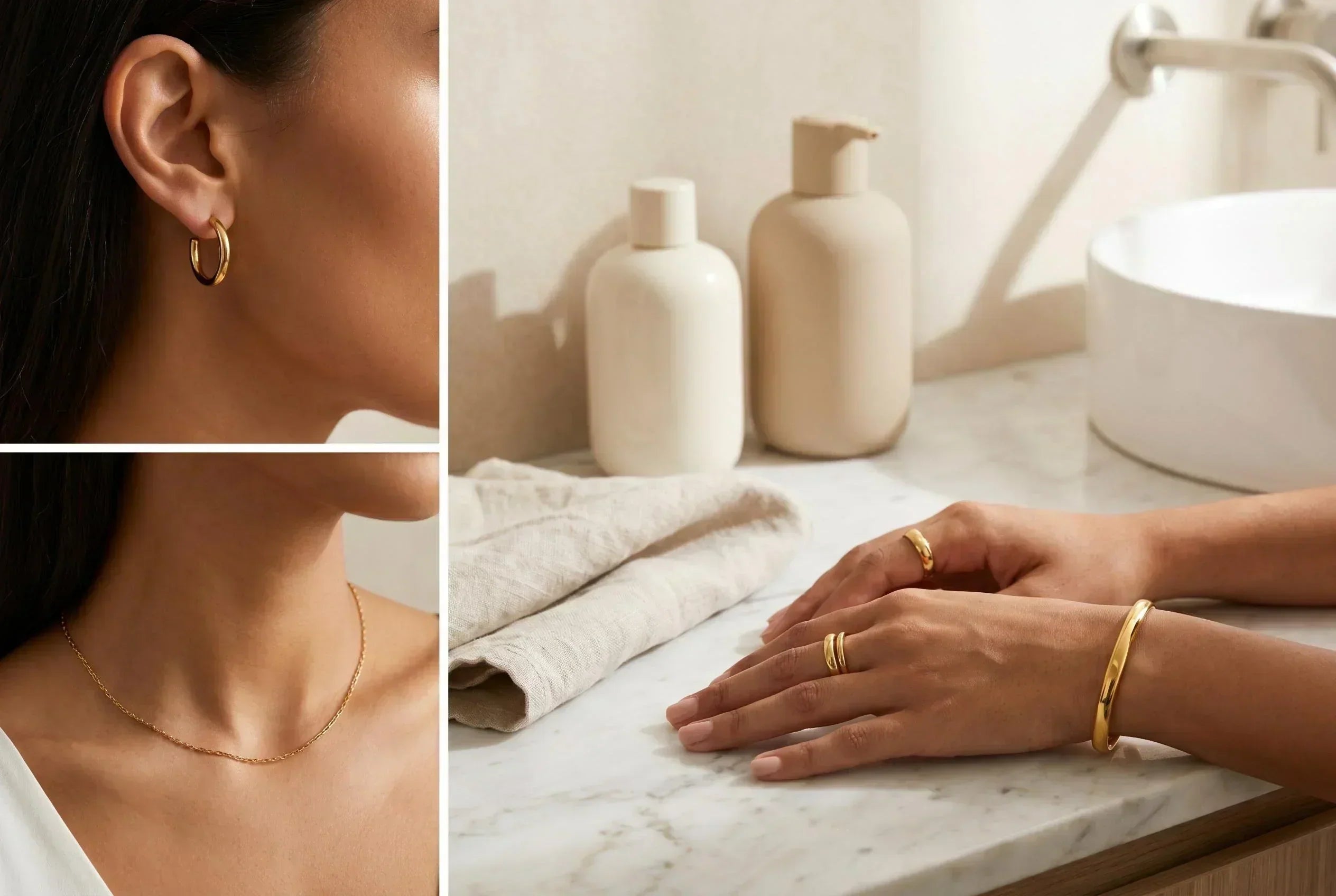
A proper breakdown of two very different gold plating processes and why the gap between them matters far more than most people realise before they spend their money.
Here is something most jewellery brands will not tell you upfront. Two pieces can both be labelled gold plated, look nearly identical in the shop and cost similar prices. Yet one will still look beautiful in three years and the other will be sitting at the back of a drawer by summer.
The difference comes down to one thing. How the gold was applied. Specifically, whether the piece was made using PVD gold plating or traditional gold plating. These are two genuinely different processes that produce very different results. And in Australia, where summers are relentless, the ocean is part of daily life and most women want earrings, necklaces, rings and bracelets they can actually wear every single day, that gap is even more pronounced than it would be anywhere else.
This guide covers everything honestly. What each process is, how they stack up in real conditions and what to actually look for when you are choosing pieces that are meant to last.
What Traditional Gold Plating Actually Is
Traditional gold plating uses a process called electroplating. The base metal, usually brass or copper, is submerged in a solution containing dissolved gold particles. An electric current passes through, causing the gold to deposit onto the surface of the metal. Simple enough in theory. The problem shows up later.
The gold layer produced by electroplating is typically very thin. We are talking fractions of a micron in many cases. The gold sits on top of the base metal rather than being bonded to it at a deep level. This means the coating wears away through regular use. Moisture, friction, sweat, contact with skin care products. Over time the base metal starts showing through. Often as green or darkened patches on the skin.
And that base metal is the other issue. Brass and copper react with moisture and the natural acids on your skin. That green ring you sometimes get on your finger after wearing cheap gold jewellery? That is the base metal oxidising against your skin. Nothing dangerous. Just not what anyone bought the piece for.
The thickness of traditional gold plating is measured in microns. Many fashion pieces use plating as thin as 0.5 microns or less. At that thickness, even light daily wear shows signs of deterioration within months rather than years.
What PVD Gold Plating Is and Why It Works Differently
PVD stands for Physical Vapour Deposition. Gold is vaporised inside a vacuum chamber and then deposited onto the surface of the base metal at a molecular level. The gold atoms bond to the surface with substantial strength because they are applied under controlled vacuum conditions with nothing interfering with the process.
The result is a layer of gold that is genuinely integrated into the surface. Not just resting on top of it. PVD coatings are significantly harder and more wear resistant than traditional electroplating. They hold up better against water, sweat, friction, UV exposure and the general reality of daily wear.
The base metal matters here too. Quality 18K PVD gold plated jewellery, including pendant necklaces, hoop earrings, rings and bangles, uses stainless steel underneath. Stainless steel does not react with moisture or skin chemistry the way brass and copper do. So even if the gold layer experiences minor surface wear over years of use, the stainless steel underneath will not corrode, tarnish or cause marks on your skin.
PVD does not just add gold on top. It bonds it. That single distinction changes everything about how long a piece actually lasts on your body.
The PVD Process in Four Steps
The stainless steel base is thoroughly cleaned at a microscopic level inside the vacuum chamber. Any surface contamination is removed before plating begins.
Inside the vacuum chamber, 18K gold is heated until it vaporises. The vacuum environment ensures the gold particles travel cleanly to the target surface.
The vaporised gold condenses onto the stainless steel surface and forms a tightly bonded coating. The bond is far stronger than what electroplating achieves.
The finished piece has a gold surface that resists wear, water exposure and friction far better than traditionally plated alternatives. The gold colour stays true for considerably longer.
Side by Side. The Differences That Actually Matter
Here is how these two processes compare across the things that actually affect how long your jewellery looks good in real life.
- Gold bonded at molecular level in a vacuum environment
- Stainless steel base resists corrosion and skin reactions
- Designed for water exposure including showering and swimming
- Coating significantly harder than electroplated alternatives
- Nickel free, suitable for most skin types
- Does not cause green marks on skin
- Thin gold layer sits on the surface rather than bonding to it
- Brass or copper base causes green marks and tarnishing
- Moisture and sweat accelerate fading and colour loss
- Plating wears away faster with regular friction
- Often contains nickel which may irritate sensitive skin
- Base metal oxidises against skin over time
in PVD plating
steel used as the base
quality PVD pieces
Why the Gap Is Bigger in Australia Than Anywhere Else
Australia is genuinely one of the harder environments for jewellery. The UV index is among the highest in the world. Humidity along the coast is significant for most of the year. A large portion of the population lives close to the ocean and spends real time in salt water. Add in sweaty summers that run for six months, active outdoor lifestyles and the very Australian habit of wearing the same jewellery every single day without thinking twice about it, and you have conditions that will absolutely push the limits of cheaper plating.
Traditional gold plating was not designed for this kind of use. It was designed for occasional wear, kept dry, stored carefully between outings. The reality of how most Australian women actually wear their jewellery, with stud earrings that never come out, a layered necklace worn through a swim, anklets on at the beach all summer and tennis bracelets taken to the gym, accelerates deterioration in a way most buyers never anticipate when they make the purchase.
PVD gold plating on a stainless steel base handles these conditions far better. That is not a marketing line. It is the engineering reason the PVD process was developed in the first place. Industrial applications have used PVD coatings on tools and components that face extreme wear conditions for decades. The same science applied to jewellery makes it genuinely more durable for the kind of daily Australian life most people are actually living.
If you have ever bought a gold piece that looked perfect in the shop and was embarrassingly patchy three months later, you almost certainly bought traditionally plated jewellery on a brass base. That pattern is extremely common and completely avoidable once you know what to look for before you buy.
How to Tell What You Are Actually Buying
Check the base metal first
The base metal is the most important detail on any plated piece. If the listing says stainless steel, that is a strong indicator of a more durable construction. If it says brass, copper or does not mention the base metal at all, proceed carefully. Stainless steel as a base means no green marks and far better resistance to everyday corrosion.
Look for the karat and process stated clearly
A brand confident in its materials will state both openly. 18K PVD gold plating over 316L stainless steel is specific, verifiable information. Vague terms like gold tone, gold finish or gold colour typically indicate low grade electroplating with minimal longevity. If the product description avoids the specifics, that is usually telling you something.
Ask about water resistance
A genuinely durable gold plated piece should handle daily water contact without any issue. If a brand advises you to remove the piece before washing your hands or showering, that says something important about the quality of the plating underneath the surface shine.
At GLISTIA, every gold piece across the waterproof jewellery collection, from earrings and necklaces to anklets and wristwear, uses 18K PVD gold plating over surgical grade stainless steel. The materials are stated clearly on every product page because there is nothing to hide. That level of transparency is worth looking for with any jewellery purchase.
Getting the Most Out of Your PVD Gold Pieces
Even the most durable plating benefits from a few simple habits. None of this requires special products or much effort at all.
Rinse after salt water. A quick rinse with fresh water after the ocean or a sweaty outdoor session removes salt deposits before they have a chance to build up over time. Thirty seconds under a tap is genuinely all it takes.
Apply products before putting jewellery on. Perfume, body lotion and sunscreen are fine in general, but applying them directly onto your pieces is worth avoiding when you can. Put your jewellery on after your skin care routine and the surface stays cleaner for longer.
Store pieces separately. Gold surfaces can get micro scratches from other metals sitting together in a shared jewellery dish. A small pouch or dedicated compartment keeps your pieces looking sharp over time. This applies to everything from chain bracelets and pearl earrings to sterling silver rings and drop earrings.
That is genuinely it. PVD gold plated jewellery does not need polishing products, specialist cleaning solutions or particularly demanding upkeep. The durability is built into the way it was made in the first place.
Yes. The gold used in PVD plating is real gold, measured in karats the same way solid gold is. 18K PVD gold plating contains 75 percent pure gold, the same gold content as 18K solid gold jewellery. The difference is in how the gold is applied and the quantity used, not in the quality of the gold itself. You are wearing real gold against your skin.
No. Green marks on skin come from the base metal oxidising, most commonly brass or copper reacting with moisture and skin chemistry. PVD gold plating over stainless steel eliminates this problem at the source because stainless steel simply does not react that way. If your piece is 18K PVD gold on a stainless steel base, green marks are not something you will encounter during normal everyday wear.
PVD gold plated jewellery on a stainless steel base is designed to handle water contact including daily showering and swimming. That said, prolonged exposure to very harsh chemicals such as heavily chlorinated spa water or strong cleaning products is worth avoiding for any plated jewellery. Everyday water including the ocean, the pool and the shower is well within what the process is designed to withstand.
PVD gold plating lasts significantly longer than traditional electroplating under everyday conditions. Traditionally electroplated pieces can show visible wear within months of regular use. PVD plated pieces on stainless steel are designed to maintain their appearance for years with normal wear and basic care. The actual lifespan of any plated piece depends on how it is worn and what it is exposed to, but the structural advantage of PVD over electroplating is well established in materials science.
Quality 18K PVD gold plated jewellery on a stainless steel base is generally considered suitable for most skin types. The stainless steel base is nickel free in quality pieces, which removes the most common cause of jewellery related skin reactions. If you have a known metal sensitivity, confirm with the brand that the specific piece is nickel free before purchasing. Anyone with a severe known allergy to specific metals should consult a dermatologist before wearing any plated jewellery.
Jewellery That Is Actually Built to Stay
Every GLISTIA piece uses 18K PVD gold plating over surgical grade stainless steel. Designed for everyday Australian life.