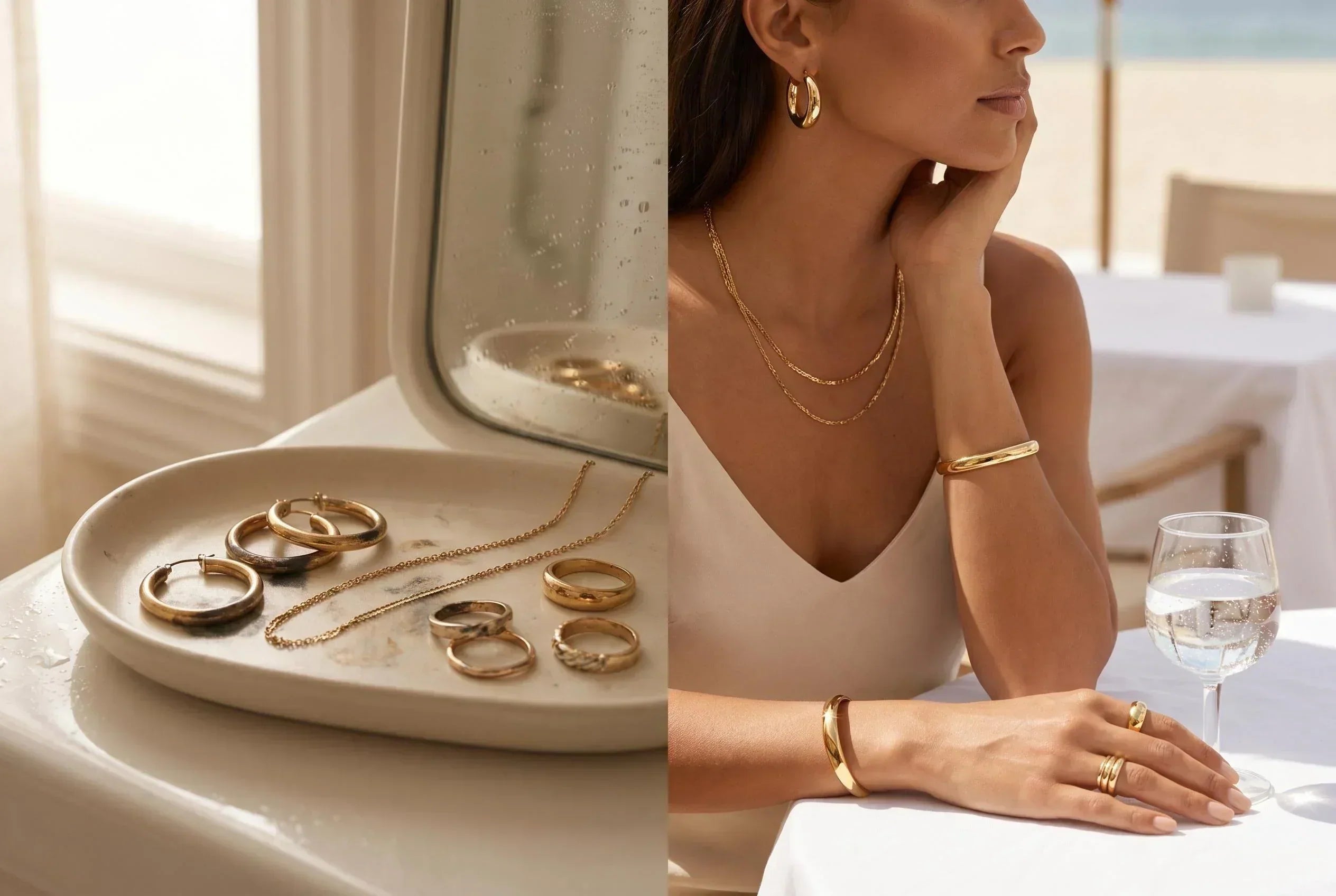
An honest answer to the question every Australian buyer asks before clicking buy on gold plated jewellery, and what makes 18K PVD gold plated different.
If you have ever bought a gold plated necklace that turned dull within months, left a green mark on your neck, or chipped along an edge after a few showers, you already know why this question matters. Quality 18K PVD gold plated jewellery does not behave that way. The reason is in the materials and the process, and once you understand why, you can buy with confidence.
This is a common question from Australian buyers considering 18K PVD gold plated jewellery. The honest answer is that not all gold plated jewellery tarnishes equally. Cheap plated pieces tarnish quickly. Quality 18K PVD gold plated pieces on stainless steel resist tarnishing for years of regular wear. The difference comes down to two specific things, and we break both of them down below.
For the full picture on why quality 18K PVD gold plated is the smart everyday choice, our 18K PVD gold plated guide covers it. For the question of whether the gold itself is real, our real gold guide answers honestly.
The Honest Short Answer
Quality 18K PVD gold plated jewellery on 316L stainless steel is highly resistant to tarnishing. With normal everyday wear and basic care, these pieces typically hold their finish for years without showing tarnish marks, dullness, or colour change. The combination of a non reactive base metal and a vacuum bonded gold layer is what makes this possible.
Budget gold plated jewellery on brass or zinc alloy bases tarnishes much faster. The cheaper plating processes used on these pieces also wear away faster, exposing the reactive base metal underneath. This is what most people picture when they think of gold plated jewellery tarnishing, and it is a real problem with cheaper construction.
Both can legally be described as 18K PVD gold plated in Australia. The materials underneath the gold are what separate one from the other.
Tarnish is not a question of whether something is gold plated. It is a question of what is underneath the gold and how the gold got there.
What Causes Gold Plated Jewellery to Tarnish
Tarnishing on jewellery is a chemical reaction between metal and its environment. Several specific causes show up most often with gold plated pieces. Knowing them helps you understand why quality 18K PVD gold plated jewellery resists each one.
Brass, copper and zinc alloys all oxidise when they meet moisture and air. As soon as the gold plating wears thin, these base metals start tarnishing immediately. This is the number one cause of plated jewellery turning dull or leaving green marks.
Standard electroplating produces a soft, thin gold layer that wears away quickly with daily friction. Once it wears through, the base metal is exposed and tarnishing begins. Cheap plating often fails within months under regular wear.
Perfumes, sunscreens, household cleaners, chlorinated pool water and salt water all contain chemicals that accelerate tarnishing. They eat through cheap plating quickly and react with the base metal underneath.
Body chemistry varies. Some people have more acidic skin or sweat heavily, both of which can speed up plating wear and tarnishing. This is why one person can wear the same plated piece for years while another sees it fade in months.
Storing jewellery in a humid bathroom, in plastic bags that trap moisture, or jumbled together where pieces scratch each other all accelerate the breakdown of plating. Australian humidity makes this worse than in drier climates.
Constant rubbing against clothing, bags and skin gradually wears any plating down. Cheap plating cannot withstand this. Quality PVD plating is significantly harder and resists this kind of wear for far longer.
Why 18K PVD Gold Plated on Stainless Steel Resists All of These
Quality 18K PVD gold plated jewellery addresses every one of those causes through its construction. Two specific things make the difference, and both matter equally.
The base metal is non reactive
316L surgical grade stainless steel does not oxidise when it meets moisture, sweat, salt water or chlorine. It is the same material used in surgical instruments and medical implants for exactly this reason. Even if the plating eventually wears in a high friction spot after years of wear, the stainless steel underneath does not turn dark, leave green marks, or react with skin. This alone removes a major cause of perceived tarnishing on plated jewellery.
The plating is bonded molecularly through PVD
PVD plating bonds the gold to the stainless steel at a molecular level inside a vacuum chamber. This produces a coating that is significantly harder, denser, and more wear resistant than electroplated alternatives. The plating itself does not flake, peel, or chip off under normal wear because it is genuinely bonded to the surface, not just deposited on top of it.
Together, these two factors mean quality 18K PVD gold plated jewellery on stainless steel typically wears for years of daily use, including beach days, gym sessions, showers and ocean swims, without showing the tarnishing patterns that plague budget plated jewellery.
For quality 18K PVD gold plated jewellery on 316L stainless steel, with regular daily wear and basic care, you can typically expect the finish to hold its appearance through 2 to 5 years of normal use. Heavier wear or regular exposure to harsh conditions may shorten this. Gentle wear and careful storage may extend it. This is considerably longer than cheap electroplated jewellery on brass, which often shows tarnishing within months.
Tarnishing Timeline by Jewellery Type
Here is what you can typically expect from each tier of gold plated jewellery in real Australian wear conditions, based on common experience.
Visible tarnishing, dullness, and green marks on skin within months. Plating wears through high contact areas first.
Holds finish reasonably well for the first year, but typically shows fading, dullness or wear patches by year two with regular wear.
Holds finish through years of daily wear including water exposure. Stainless steel base does not tarnish even where plating eventually thins in high friction areas.
Does not tarnish meaningfully. Surface scratches can be polished out indefinitely. The piece is gold throughout, so there is nothing to wear away to expose.
From the Effortless Luxury Collection. 18K PVD gold plating on 316L stainless steel across every piece.


How to Avoid Buying Plated Jewellery That Will Tarnish
Once you have decided to invest in quality 18K PVD gold plated jewellery, these five checks help you avoid pieces likely to tarnish quickly.
If the listing says brass, copper, zinc alloy, or does not specify the base metal at all, treat that as a tarnish risk. Quality brands clearly state 316L or surgical grade stainless steel because they know it matters.
Look for explicit mentions of PVD, Physical Vapour Deposition, or vacuum deposited gold. If only gold plated is listed, the piece is typically electroplated, which wears through faster and exposes any base metal underneath sooner.
Quality 18K PVD gold plated jewellery on stainless steel can be worn in water without tarnishing. Brands that make this claim usually back it with the construction. If a brand specifically tells you to avoid all water contact, the construction often cannot handle it.
Search reviews for words like tarnish, fade, dull, green or wear. Day one reviews tell you nothing about tarnishing. Reviews from customers wearing pieces for 6 months or more tell you everything.
Brands confident their pieces will not tarnish quickly back this up with returns and customer support. Brands selling cheap pieces often have weaker policies because they expect the issues that plated jewellery commonly has.
Every piece across earrings, necklaces, rings, wristwear and anklets uses 18K PVD gold plating on 316L surgical grade stainless steel. The full waterproof jewellery collection is built specifically to resist tarnishing through real Australian conditions including ocean wear, gym use and daily exposure to sweat and skin care products.
Simple Habits That Help Your Plated Jewellery Last Longer
Even quality 18K PVD gold plated jewellery benefits from a few sensible habits. None of these are demanding, and most take seconds to do.
Apply skin care first, jewellery second. Putting jewellery on after moisturiser, sunscreen and perfume have absorbed into your skin reduces direct chemical contact with the plating. Apply, wait a minute, then put your pieces on.
Rinse with fresh water after ocean or pool swims. Salt and chlorine sit on the surface after they dry. A quick freshwater rinse removes them before they can react with the plating over time. Thirty seconds under the tap is enough.
Store pieces individually. Pieces stored together in a box or dish scratch each other, and scratches in plating create entry points for moisture and chemicals. A small pouch or compartment per piece makes a real difference over years of ownership.
Wipe with a soft cloth occasionally. A quick wipe with a clean soft cloth after wear removes accumulated oils and product residue. This keeps the surface clean without needing harsh cleaners that can damage plating.
Keep pieces dry between wears. Storing jewellery in a humid bathroom or sealed in plastic bags traps moisture. A dry drawer or jewellery box in a cool dry area is best for long term preservation.
Quality 18K PVD gold plated jewellery on 316L stainless steel is highly resistant to tarnishing and typically holds its finish for several years of regular wear. The combination of a non reactive stainless steel base and a vacuum bonded gold layer prevents the chemical reactions that cause tarnishing in cheaper plated jewellery. Budget gold plated jewellery on brass or zinc alloy bases tarnishes far faster, often within months. The materials underneath the gold are what determine tarnish resistance.
Skin turning green happens when the base metal underneath the gold plating contains copper, brass, or alloys that oxidise when they meet sweat and moisture. As the plating wears thin, the base metal makes direct contact with skin and the green discolouration appears. Quality 18K PVD gold plated jewellery on 316L stainless steel does not cause this because stainless steel does not oxidise and contains no nickel or copper that would react with skin.
Yes. Quality 18K PVD gold plated jewellery on stainless steel is designed to handle water exposure including showers, swimming pools, ocean swims and daily sweat. The vacuum bonded gold layer and the non reactive stainless steel base both resist water damage. A simple rinse with fresh water after pool or ocean exposure helps remove any chlorine or salt residue and supports long term durability.
For quality 18K PVD gold plated jewellery on 316L stainless steel, with regular daily wear and basic care, the finish typically holds for 2 to 5 years of normal use. Pieces worn occasionally or with extra care may last longer. Heavy daily wear in harsh conditions like constant ocean exposure may shorten this. The wear pattern is usually gradual gentle dulling rather than sudden chipping or flaking, because the gold is molecularly bonded to the steel.
When the plating eventually thins in high friction areas after years of wear, the 316L stainless steel base is exposed. Stainless steel is itself a non reactive, hypoallergenic, tarnish resistant metal. So even when the plating reaches its end, the piece does not turn green, cause skin reactions, or rust. It simply takes on a slightly more silver appearance in the worn areas. This is very different from electroplated jewellery on brass, where worn plating exposes a reactive metal underneath.
Yes, in principle a PVD gold plated piece can be replated by a jeweller or facility with PVD equipment. In practice, quality pieces last so long that replating is rarely needed before customers naturally update their jewellery collection. PVD equipment is also less common at high street jewellers than electroplating equipment, so replating PVD pieces typically means returning them to the original brand or a specialist facility.
18K Gold Plated You Can Actually Wear
18K PVD gold plating on 316L surgical grade stainless steel. Waterproof, nickel free, made for Australian life.