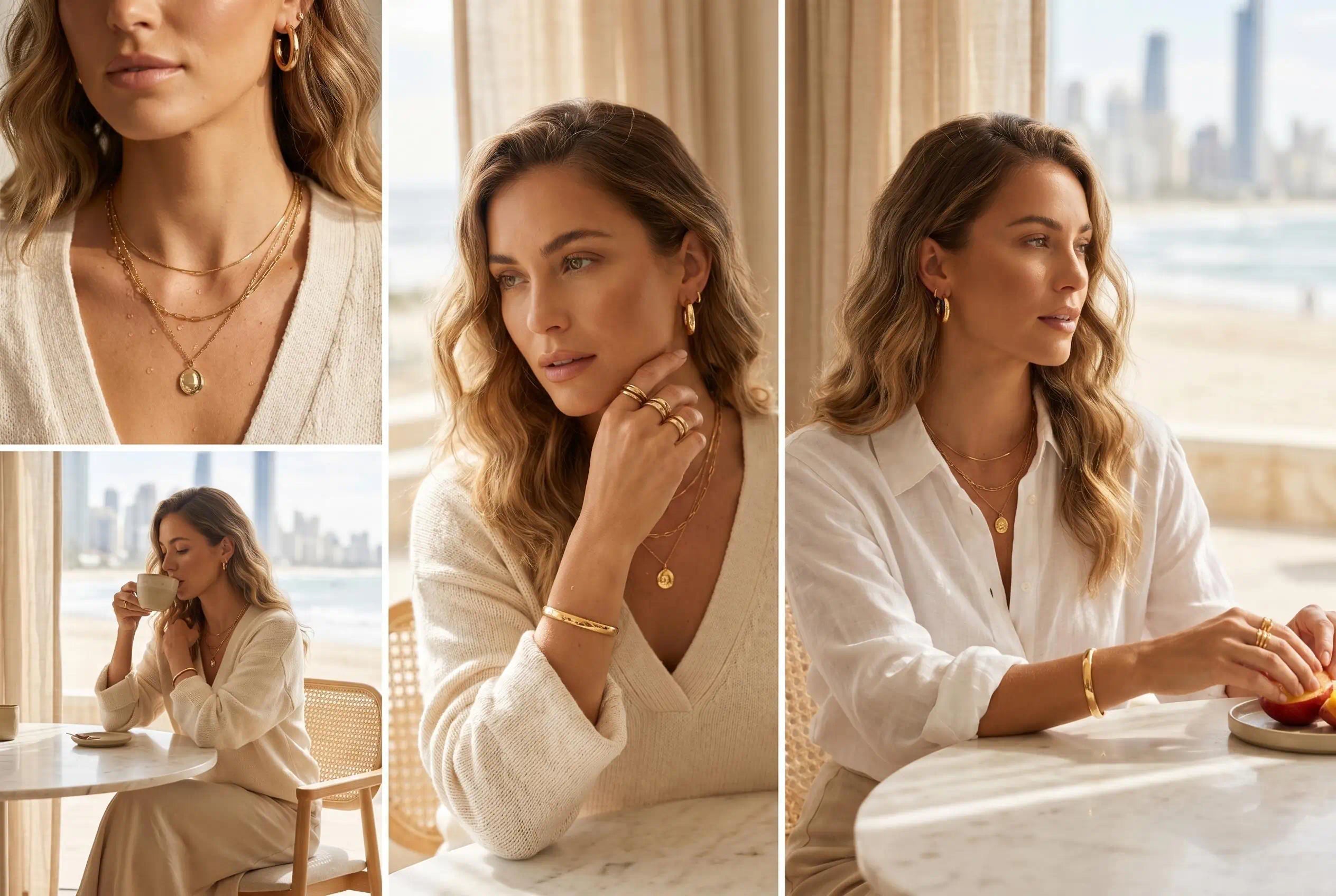
Realistic Australian wear test. How long quality 18K PVD gold plated jewellery actually lasts through real beach days, gym sessions, and daily life.
Quality 18K PVD gold plated jewellery on 316L stainless steel typically lasts 2 to 5 years of regular daily wear before showing meaningful signs of plating wear. Some pieces, with gentle care and lighter wear, hold their finish for longer. Some pieces, under heavy daily use in harsh conditions, may show wear sooner. This guide gives you realistic expectations based on actual Australian wear conditions.
Lifespan is one of the questions Australian buyers ask most often before committing to 18K PVD gold plated jewellery. The honest answer is more useful than a marketing number, so here it is. We cover what affects lifespan, how the major wear scenarios actually play out, and what you can do to make your jewellery last for years.
For the full picture on why quality 18K PVD gold plated is the smart everyday choice, our 18K PVD gold plated guide covers it. For the related question of tarnish resistance, our tarnish guide answers honestly.
Realistic Lifespan by Jewellery Type
Here is what to expect from each tier of gold jewellery based on how the materials and processes actually perform in real Australian wear conditions.
The 2 to 5 year range for quality 18K PVD gold plated jewellery is supported by a 2023 jewellery industry report finding that around 70 percent of users said their PVD plated pieces still looked great after 2 to 3 years of regular wear. Some pieces last longer with light wear and good care. Heavy daily wear in harsh conditions like constant ocean exposure may shorten this range.
Lifespan is not a single number. It is a range that depends on the wearer, the conditions, and the care. Quality 18K PVD gold plated holds up well across all three.
Six Factors That Affect How Long Your Jewellery Lasts
Two people can buy the same piece on the same day and have completely different wear experiences over a year. These six factors explain why.
Thicker coatings last longer. Quality jewellery PVD typically uses 0.2 to 0.5 microns of gold. Pieces at the higher end of that range generally hold up significantly better in long term wear than pieces at the lower end.
316L surgical grade stainless steel is the gold standard. It is non reactive, does not tarnish, and provides a stable surface that supports the plating. Brass and zinc alloy bases are weaker and can compromise the piece even if the plating itself is intact.
A ring worn while gardening daily wears faster than a pendant worn under clothing. Active hands, heavy bag straps, sports equipment and physical work all create friction that gradually wears any plating.
Perfumes, sunscreens, household cleaners, and salon chemicals are harsher on plating than water alone. Frequent exposure to these can shorten lifespan even on quality pieces. Putting jewellery on after these products has dried helps a lot.
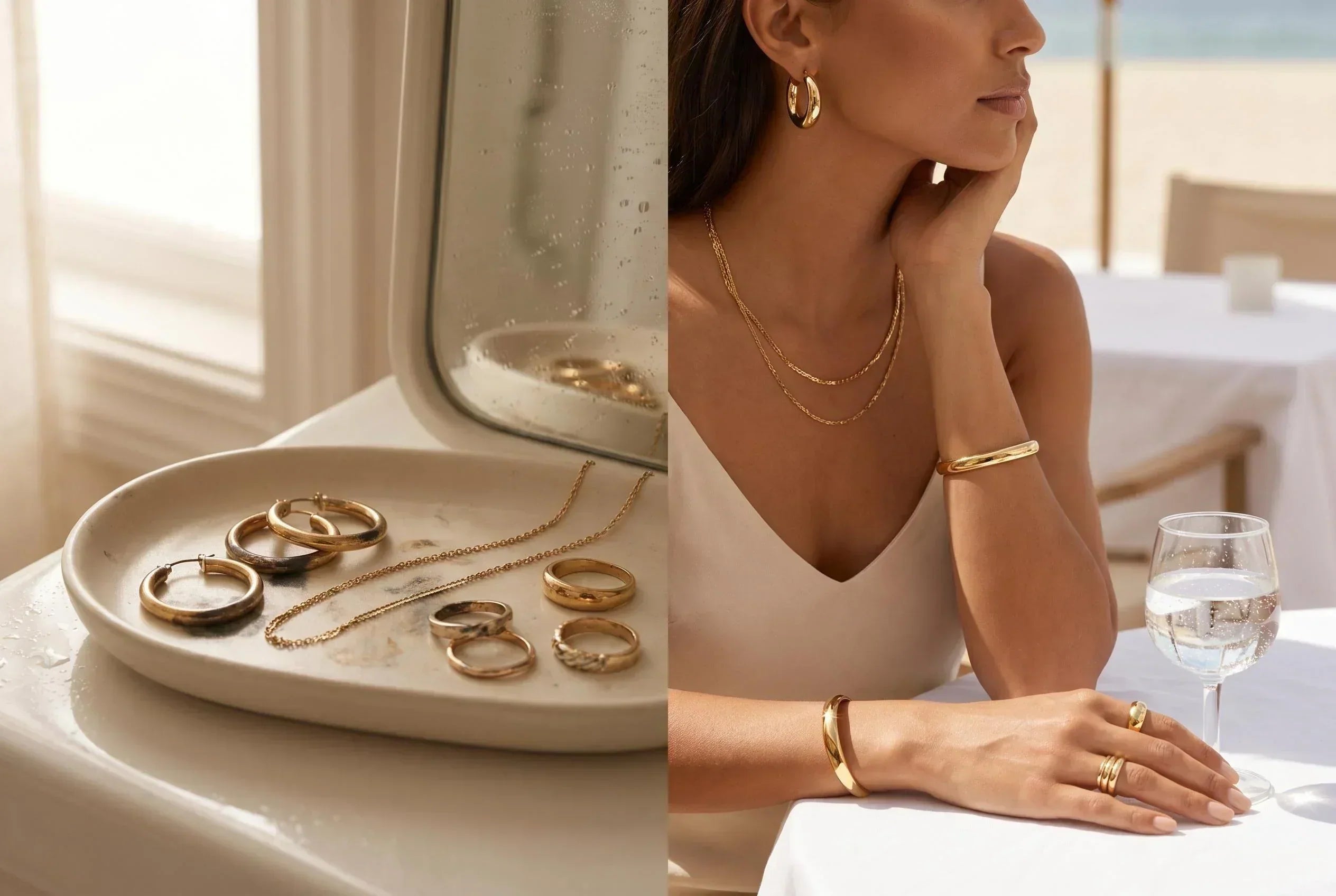
Pieces stored separately in soft pouches typically last longer than pieces tossed together in a dish or drawer. Scratches in plating create entry points for moisture and chemicals, which speeds up wear.
Skin acidity and sweat composition vary between people. Some wearers naturally extend the life of their jewellery, others see faster wear. This is normal and does not reflect quality issues with the piece itself.
Australian Wear Test. Real Scenarios, Honest Outcomes
How does quality 18K PVD gold plated jewellery actually hold up across the situations Australian wearers put their jewellery through? Here is the honest breakdown.
Quality 18K PVD gold plated on stainless steel handles ocean swimming well. Salt residue does not damage the plating during wear. A quick freshwater rinse afterwards prevents long term salt buildup. Sand scratches if it gets trapped in chain links, so a gentle rinse to remove sand is worth the 10 seconds.
Sweat itself does not damage quality PVD gold plated jewellery. Stainless steel does not corrode in sweat. The main wear factor in the gym is friction, particularly from weights and equipment that contacts rings. Earrings and necklaces hold up well in cardio settings.
Chlorine is harsher than salt water but quality 18K PVD gold plated handles regular pool wear without immediate damage. A freshwater rinse after pool swims helps preserve the plating. Long term daily pool wear may shorten the typical 2 to 5 year lifespan range slightly.
Daily showering with quality 18K PVD gold plated jewellery is fine. Soaps and shampoos are mild enough to not affect the plating in normal use. Some wearers prefer to remove pieces during showering to keep them looking newer for longer, but it is not required.
Sleeping in jewellery is fine for the plating itself but can cause faster wear from friction against bedding and tossing. Removing necklaces and bracelets at night is a small habit that can extend their everyday appearance significantly over years.
Earrings and necklaces worn under collars or against scarves see daily friction. Bracelets that contact bag straps wear faster than those worn alone. None of this is damaging in the short term but accumulates over years of daily wear.
For Australian wearers using quality 18K PVD gold plated jewellery for ocean swims, gym sessions, daily showers and active everyday life, expect the finish to hold up well through years 1 and 2, with very gradual softening of the original mirror shine in years 3 and beyond. This is normal and expected. The piece remains beautiful, just with the gentle patina of having been actually worn rather than kept in a box.
From the Effortless Luxury Collection. 18K PVD gold plating on 316L stainless steel.


Five Habits That Make Your Jewellery Last Longer
None of these are demanding, and most take seconds. They make a real difference over years of ownership.
Wait until moisturiser, sunscreen and perfume have absorbed into your skin before putting your pieces on. This reduces direct chemical contact with the plating, which extends lifespan.
Salt and chlorine sit on the surface after they dry. A 30 second freshwater rinse removes them before they can build up over time. This is the single most useful habit for Australian beach lovers.
Pieces tossed together scratch each other, and scratches in plating create entry points for moisture. A small soft pouch or compartment per piece keeps the surfaces protected long term.
A quick wipe with a clean soft cloth after wear removes accumulated oils and product residue. This keeps the plating clean without needing harsh cleaners that could damage it.
Heavy gym sessions with weights, manual work with tools, or manual hobbies create more friction than typical daily wear. Removing rings and bracelets for these activities significantly extends their lifespan.
Every piece across earrings, necklaces, rings, wristwear and anklets uses 18K PVD gold plating on 316L surgical grade stainless steel. The full waterproof jewellery collection is built specifically for the realities of Australian everyday wear, including beach days, gym sessions, and the active life that defines us. Visit GLISTIA to see the full collection.
Quality 18K PVD gold plated jewellery on 316L stainless steel typically lasts 2 to 5 years of regular daily wear before showing meaningful signs of plating wear. Lighter wear and gentle care can extend this. Heavy daily wear in harsh conditions like constant ocean exposure or manual labour may shorten it. Industry data from 2023 found around 70 percent of PVD jewellery users said their pieces still looked great after 2 to 3 years.
Two specific things. First, the plating is bonded molecularly through PVD vacuum deposition rather than chemically through electroplating, which produces a harder and more wear resistant coating. Second, quality 18K PVD pieces use 316L surgical grade stainless steel as the base, which is non reactive and stable. Both factors combined typically deliver several times the lifespan of cheap electroplated jewellery on brass.
In rare cases with very gentle wear and careful storage, yes. Some industry reports cite premium PVD pieces lasting up to 10 years under ideal conditions. For typical Australian everyday wear including beach days, gym sessions and daily life, the realistic expectation is 2 to 5 years. Marketing claims of 10 year lifespans should be treated cautiously and viewed in the context of how the piece will actually be worn.
Quality PVD plating wears very gradually rather than chipping or flaking. The mirror shine softens slightly first, then high contact areas like the inside of rings or the back of pendants where they meet skin start to show very gentle thinning. The piece does not turn green, leave skin marks, or tarnish badly because the stainless steel base underneath is itself a non reactive metal. The wear is subtle and progressive over years.
Pieces that experience less daily friction typically last longest. Earrings often outlast bracelets and rings because they have less contact with surfaces and clothing. Necklaces vary depending on whether they sit against clothing or skin. Rings worn daily on the dominant hand often see noticeable wear sooner. Choosing pieces that match your daily routines helps each piece reach its full potential lifespan.
For jewellery in the $50 to $200 AUD range, 2 to 5 years of daily wear represents excellent value. Compare it to cheap fashion jewellery that often shows wear in months, or solid gold pieces that cost ten to fifty times as much. Quality 18K PVD gold plated jewellery delivers genuine 18K gold appearance, stainless steel durability underneath, water resistance, and years of everyday wear at a fraction of solid gold pricing.
18K Gold Plated You Can Actually Wear
18K PVD gold plating on 316L surgical grade stainless steel. Waterproof, nickel free, made for Australian life.