Best Tarnish Resistant Jewellery Australia: A Buyer's Guide
A dark patch on a chain. A green ring mark on a finger. A bangle that looked gold last month and now looks dull. These are not rare experiences. They are what happens when everyday jewellery is made from the wrong base metal.
Tarnish resistance starts with materials, not price. This guide explains what makes jewellery resistant to tarnishing, what to look for when buying, and which pieces are built for the conditions Australian women actually live in.
Why Does Jewellery Tarnish?
Tarnishing is a chemical reaction. When the base metal of a piece of jewellery comes into contact with moisture, oxygen, sweat, perfume or chlorine, it oxidises. The result is discolouration on the surface of the piece and sometimes a green or dark mark on the skin underneath.
The base metal is the main factor. Brass and copper bases are highly reactive. They oxidise quickly in warm, humid conditions, which describes most of the Australian climate for most of the year. A thin electroplated gold coating over a brass base slows this process, but does not eliminate it. Once the coating thins at contact points like clasps and edges, the brass underneath starts to react.
Stainless steel behaves very differently. Surgical-grade stainless steel does not corrode or oxidise in the way brass does. It is this base metal that makes 18K PVD Gold Plated jewellery designed to be tarnish resistant, not just the gold coating on top. The full material explanation is covered in the PVD vs electroplating guide.
What Does Tarnish Resistant Actually Mean?
Tarnish resistant means the piece is designed to resist discolouration through normal wear conditions. It does not mean the finish is permanent or indestructible. What it means in practice is that 18K PVD Gold Plated stainless steel jewellery is built to hold its appearance through daily showers, gym workouts, summer heat and regular contact with skin, with the aim of maintaining its finish far longer than brass-based alternatives.
The PVD process (Physical Vapour Deposition) bonds the gold coating to the stainless steel base at a molecular level in a vacuum chamber. This creates a more adhesive bond than electroplating, which is why the coating is more resistant to the friction and chemical contact that causes tarnishing in standard plated jewellery.
For a detailed, honest answer on whether 18K PVD Gold Plated jewellery tarnishes, the tarnish guide for Australian buyers covers real wear expectations without overstatement. And for how long the finish is designed to last, the wear guide gives a practical picture.
How to Compare Tarnish Resistance by Material
Not all gold-toned jewellery is built the same. Here is a plain comparison of the most common materials found in Australian jewellery retail:
| Material | Base Metal | Tarnish Resistance | Water Exposure |
|---|---|---|---|
| 18K PVD Gold Plated Stainless Steel | Surgical stainless steel | High: designed for tarnish resistance | Designed for water exposure |
| Solid 18K Gold | Gold alloy | High: does not tarnish | Water safe |
| Standard electroplated gold | Brass or copper | Low to moderate: depends on coating thickness | May show wear more quickly with water |
| Gold filled | Brass core | Moderate: thicker layer than plating | Moderate: avoid prolonged water exposure |
| Brass jewellery | Brass | Low: tarnishes readily in humidity | Not recommended for water |
The table above is why the base metal matters more than the finish colour. Two pieces can look identical and behave completely differently over a summer of wear based entirely on what is underneath the gold coating.
Tarnish Resistant Bangles Australia
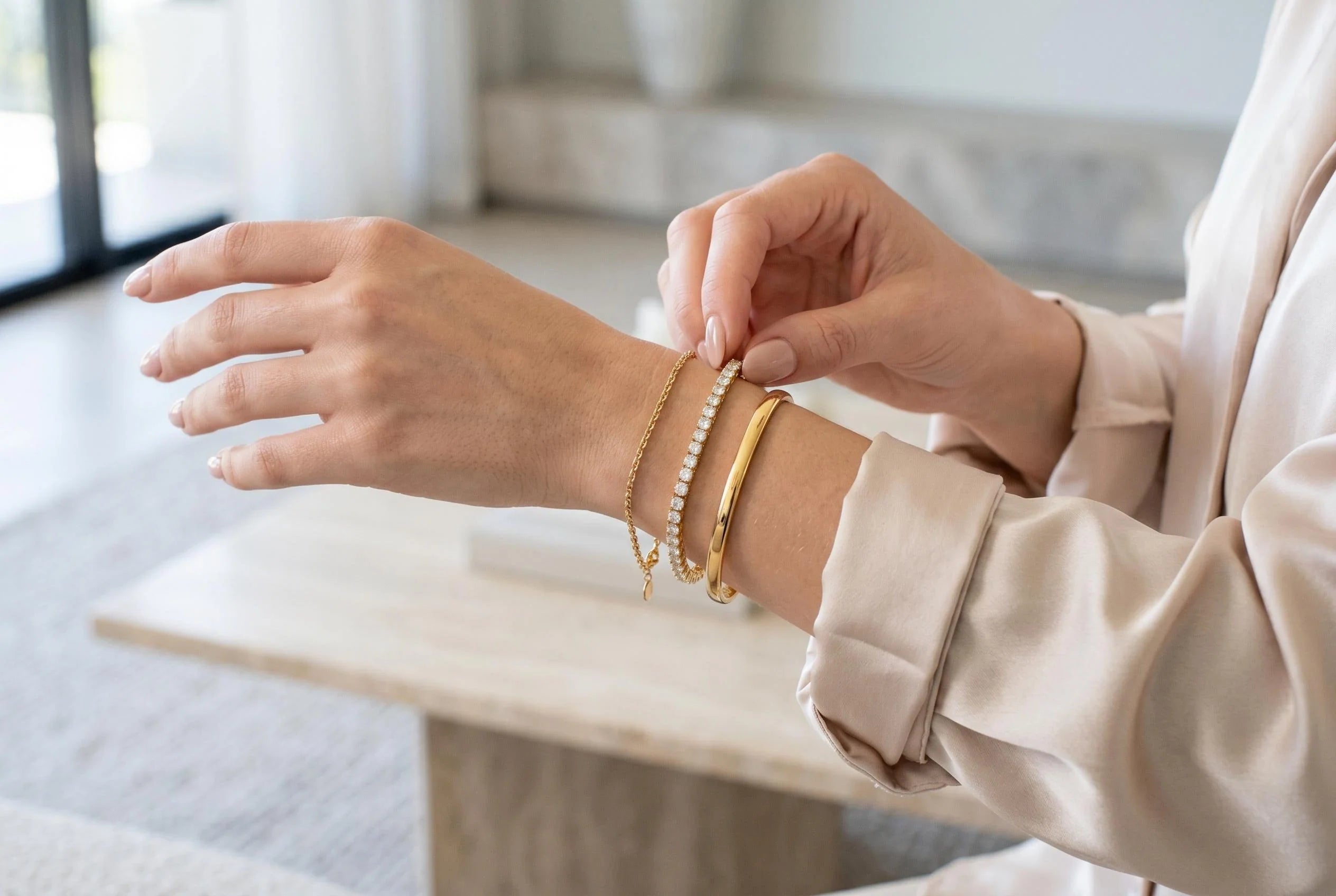
Bangles sit on the wrist through everything: cooking, cleaning, workouts and showers. They are one of the pieces most likely to be exposed to water, soap and skin contact throughout the day, which is why tarnish resistance matters more here than almost anywhere else. All three bangles below are from GLISTIA and are made from 18K PVD Gold Plated stainless steel.


All three are from the bangles collection. For the full range of tarnish resistant wristwear, the waterproof jewellery collection and the 18K PVD Gold Plated collection cover bangles, bracelets and more.
Tarnish Resistant Bracelets Australia
Chain bracelets are high-contact pieces. The links sit against skin all day, the clasp moves constantly and the piece gets the full effect of whatever the day involves. A chain bracelet in 18K PVD Gold Plated stainless steel is designed to hold its finish through this kind of daily use.


Tarnish Resistant Earrings, Necklaces, Rings and Anklets
The same material principles apply across every jewellery category. 18K PVD Gold Plated stainless steel earrings, necklaces, rings and anklets from GLISTIA are designed with the same tarnish resistance in mind as the bangles and bracelets above.
The full range is in the 18K PVD Gold Plated collection and the waterproof jewellery collection. For the complete guide to what makes jewellery designed for Australian conditions, the best waterproof jewellery Australia guide covers every category.
How to Care for Tarnish Resistant Jewellery
The right care habits extend the finish of any jewellery, including tarnish resistant pieces. None of these require special products or significant effort.
Rinse after water exposure. After swimming, showering or a workout, rinse 18K PVD Gold Plated jewellery under fresh running water and pat dry with a soft cloth. This removes chlorine, salt and sweat before they sit on the coating.
Apply products before putting on jewellery. Perfume, moisturiser and sunscreen all contain compounds that can affect any jewellery finish over time. Apply them first, let them absorb, then put on your pieces.
Store away from steam and humidity. Bathrooms are one of the worst places to leave jewellery. The combination of daily steam and humidity creates ongoing exposure to moisture. Store pieces in the gift box or a pouch in a bedroom drawer instead.
Designed to be tarnish resistant. Hypoallergenic. Built for daily Australian wear. Free shipping on orders $75 and above.
Shop Tarnish Resistant JewelleryAbout GLISTIA
GLISTIA (glistia.com.au) is a Sydney-based waterproof jewellery brand making 18K PVD Gold Plated stainless steel jewellery for Australian women, shipping Australia-wide from Ultimo NSW. Every piece is designed to be tarnish resistant, hypoallergenic and built for daily Australian life. Free shipping on Australian orders $75 and above, 30-day returns, and every order arrives in a luxury gift box with a velvet pouch and printed care note.